Authors
Page 100
Ann Morgan
1 book
Ann Moura
6 books
Ann M. Roberts
1 book
Ann Napolitano
2 books
Ann Napolitano
Ann Neumann
1 book
Ann Newmark
1 book
Ann Nocenti
American journalist, filmmaker, teacher, comic book writer and editor.
1 book

Ann Nolan Clark
Ann Nolan Clark, born Anna Marie Nolan (December 5, 1896 – December 13, 1995), was an American writer who won the 1953 Newbery Medal. source
2 books
Ann Oakley
1 book
Ann O. Squire
1 book
Ann Owen
1 book

Ann Patchett
Ann Patchett was born in Los Angeles, California, and moved with her family to Nashville, Tennessee at age six. She attended Sarah Lawrence College and the University of Iowa Writers' Workshop. In 1990, during a residential fellowship at the Fine Arts Work Center in Provincetown, Massachusetts, she wrote her first novel, The Patron Saint of Liars, which was named a New York Times Notable Book for 1992. Her second novel, Taft (1994), was awarded the Janet Heidinger Kafka Prize for fiction. Her fourth novel, Bel Canto (2001), won the PEN/Faulkner Award and the Orange Prize, and sold over a million copies in the United States. Her memoir, Truth & Beauty, which chronicled her relationship with Lucy Grealy during Grealy's death from cancer, was published in 2004. She was the editor for Best American Short Stories 2006.
17 books
Ann Pellegrini
1 book
Ann Pellegrini
1 book
Ann Pember
1 book
Ann Person
2 books
Ann Petry
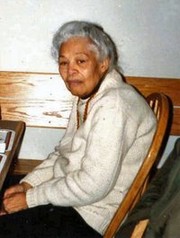
Ann Lane was born on October 12, 1908 in Old Saybrook, Connecticut as the youngest of three daughters to Peter Clark Lane and Bertha James Lane in Old Saybrook, Connecticut. Her parents belonged to the black minority of the small town. Her father was a pharmacist and her mother was a shop owner, chiropodist, and hairdresser. Ann and her sister were raised "in the classic New England tradition: a study in efficiency, thrift, and utility (…) They were filled with ambitions that they might not have entertained had they lived in a city along with thousands of poor blacks stuck in demeaning jobs." The family had none of the trappings of the middle class until Petry was well into adulthood. Before her mother became a businesswoman, she worked in a factory, and her sisters, Ann's aunts, worked as maids. The Lane girls were raised sheltered from most of the disadvantages other black people in the United States had to experience due to the color of their skin; however there were a number of incidents of racial discrimination. As she wrote in "My Most Humiliating Jim Crow Experience," published in Negro Digest in 1946, there was an incident where a racist decided that they did not want her on a beach. Her father wrote a letter to The Crisis in 1920 or 1921 complaining about a teacher who refused to teach his daughters and his niece.[citation needed] Another teacher humiliated her by making her read the part of Jupiter, the illiterate ex-slave in the Edgar Allan Poe short story "The Gold-Bug". Petry had a strong family foundation with well-traveled uncles, who had many stories to tell her when coming home; her father, who overcame racial obstacles, opened a pharmacy in the small town; and her mother and aunts who set a examples to become strong herself. Petry, interviewed by the Washington Post in 1992, says about her tough female family members that “it never occurred to them that there were things they couldn’t do because they were women. The wish to become a professional writer was raised in Ann for the first time in high school when her English teacher read her essay to the class commenting on it with the words: “I honestly believe that you could be a writer if you wanted to.”[4] The decision to become a pharmacist was her family’s. She enrolled in college and graduated with a Ph.G. degree from Connecticut College of Pharmacy in New Haven in 1931 and worked in the family business for several years. She also began to write short stories while she was working at the pharmacy. On February 22, 1938, she married George D. Petry of New Iberia, Louisiana, which brought Petry to New York. She not only wrote articles for newspapers such as The Amsterdam News, or The People’s Voice, and published short stories in The Crisis, but also worked at an after-school program at P.S. 10 in Harlem. It was during this period of her life that she had realized and personally experienced what the black population of the United States had to go through in their everyday life. Traversing the streets of Harlem, living for the first time among large numbers of poor black people, seeing neglected children up close – Petry’s early years in New York inevitably made impressions on her. Impacted by her Harlem experiences, Ann Petry used her creative writing skills to bring this experience to paper. Her daughter Liz explained to the Washington Post that “her way of dealing with the problem was to write this book, which maybe was something that people who had grown up in Harlem couldn’t do.” Petry’s most popular novel The Street was published in 1946 and won the Houghton Mifflin Literary Fellowship. With The Street, Petry became the first black woman writer with book sales topping a million copies Back in Old Saybrook in 1947, the writer worked on Country Place (1947), The Narrows (1953), other stories, and books for children, but they have never achieved the same success as her.
1 book
Ann Petry
1 book
Ann Pettifor
1 book
Ann Pilling
1 book
Ann P. Turnbull
1 book
Ann Radcliffe
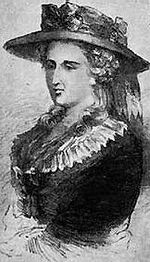
Ann Radcliffe (born Ann Ward, 9 July 1764 – 7 February 1823) was an English author and pioneer of Gothic fiction. Her technique of explaining apparently supernatural elements in her novels has been credited with gaining Gothic fiction respectability in the 1790s. Radcliffe was the most popular writer of her day and almost universally admired; contemporary critics called her the mighty enchantress and the Shakespeare of romance-writers, and her popularity continued through the 19th century. Interest has revived in the early 21st century, with the publication of paperback reprints and three biographies. Source: Ann Radcliffe on Wikipedia.
3 books
Ann Radcliffe
Ann Raimes
1 book
Ann Redisch Stampler
1 book
Ann Reit
2 books
Ann Richardson
1 book
Ann Rinaldi
30 books
Ann Roe-Hafer
1 book
Ann Rossi
1 book
Ann Rowe Seaman
1 book
Ann Rule
1 book
Ann Rule
American true crime writer
36 books
Ann Schreiber
1 book
Ann Scott
1 book
Ann Seidler
1 book
Ann Senisi Scott
1 book
Ann Seranne
1 book
Ann Sharpsteen
1 book
Ann Shen
1 book

Ann Shulgin
2 books
Ann Small
1 book
Ann Snitow
1 book
Ann Stafford
"In her fascinating introduction to Business as Usual, the publisher Kate Macdonald details the writing careers of two remarkable women authors – Helen Rees (1903–70) and Anne Pedlar (1900–66) – who, under the pseudonyms Jane Oliver and Ann Stafford, produced a staggering ninety-seven novels, both individually and together." https://web.archive.org/web/20201126131205/https://www.the-tls.co.uk/articles/business-as-usual-jane-oliver-ann-stafford-review-gerri-kimber/ "Little is known about Anne Pedlar’s early life. Her obituary notes that she had an MA and a PhD, though it is not known when she was awarded these degrees, or from which university. She had been married but had left her husband around the time that she and Helen met. Her son John Pedler had been born in the early 1930s, and was sent to Canada during the war, returning in 1943. He later worked for the Foreign Office and died in 2018. Anne drove ambulances during the Second World War, but she made her career as a novelist, publishing 25 books under the name of Ann Stafford, and a further 39 co-written with Helen. She was active in the British Red Cross from 1939, rising to the rank of Divisional Deputy President. After the war both Anne and Helen lived in Hampshire, variously living next door to each other and sharing a house in Gorley, Fordingbridge. In Anne’s last illness Helen cared for her until her death." https://web.archive.org/web/20210421180847/https://www.handheldpress.co.uk/wp-content/uploads/2021/02/Oliver-and-Stafford-biographies.pdf
1 book
Ann Stephens
1 book
Ann Swidler
1 book
Ann Temkin
2 books
Ann Tompert
3 books
Ann Turnbull
3 books