Authors
Page 187
Felton, Harold W.
3 books

Fernando Aramburu
Fernando Aramburu es autor de los libros de cuentos Los peces de la amargura (2006, XI Premio Mario Vargas Llosa NH, IV Premio Dulce Chacón y Premio Real Academia Española 2008), El vigilante del fiordo (2011) y Hombre caído (2025), de las obras de no ficción Autorretrato sin mí (2018), Vetas profundas (2019) y Utilidad de las desgracias (2020), así como de las novelas Fuegos con limón (1996), Los ojos vacíos (2000, Premio Euskadi), El trompetista del Utopía (2003), Bami sin sombra (2005), Viaje con Clara por Alemania (2010), Años lentos (2012, VII Premio Tusquets Editores de Novela y Premio de los Libreros de Madrid), La gran Marivián (2013), Ávidas pretensiones (Premio Biblioteca Breve 2014) y Patria (2016, Premio Nacional de Narrativa, Premio de la Crítica, Premio Euskadi, Premio Francisco Umbral, Premio Dulce Chacón, Premio Arcebispo Juan de San Clemente, Premio Strega Europeo, Premio Lampedusa, Premio Atenas, entre otros), el último gran fenómeno literario español, traducida a 35 lenguas y convertida en prestigiosa serie. Los vencejos (2021), ácida y enternecedora, Hijos de la fábula (2023) y El niño (2024) lo han confirmado como uno de los mejores escritores europeos. Ha recogido su poesía completa en Sinfonía corporal (2023). (<a href="https://www.planetadelibros.com/autor/fernando-aramburu/000028897" target="_blank">Source</a>)
3 books
Fiona Lowe
3 books
Fiona Staples
3 books
Fitch, Janet
3 books
Flash Kids
3 books
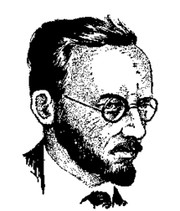
Fletcher Pratt
Murray Fletcher Pratt (1897–1956) was an American writer of science fiction, fantasy and history. He is best known for his works on naval history and on the American Civil War and for fiction written with L. Sprague de Camp.
3 books
Fleur Jaeggy
3 books

Flora Nwapa
3 books

F. M. Busby
Francis Marion Busby was a science fiction writer and science fiction fan. During 1960 he was a co-winner of the Hugo Award for Best Fanzine. - Wikipedia
3 books
Forrest Carter
3 books
Fran Arrick
3 books
Frances Amelia Yates
3 books
Francesca Zappia
3 books
Francesco Dal Co
3 books

Frances Ellen Watkins Harper
3 books

Frances FitzGerald
3 books

Frances Mayes
Frances Mayes is an American university professor, poet, memoirist, essayist, and novelist.
3 books
Francine Hughes
3 books
Francine Shapiro
3 books
Francis A. Carey
3 books
Francis Beeding
A pseudonym for co-authors <a href=http://openlibrary.org/authors/OL122595A>Hilary Saint George Saunders</a> and <a href=https://openlibrary.org/authors/OL1777046A/>John Leslie Palmer</a>. They were Oxford graduates who met while at the League of Nations in Geneva. Palmer was a drama critic who wrote books on the theatre under the pseudonym "Christopher Haddon". Saunders served with the Welsh Guards in WWI and worked for the Air Ministry in WWII, writing the famous pamphlet, The Battle of Britain. From 1946 to 1950 he was librarian of the House of Commons. They also wrote mainstream fiction under the name <a href=https://openlibrary.org/authors/OL2335418A/David_Pilgrim/>David Pilgrim</a>. Beeding has over thirty novels to his credit, five of which have been adapted into feature films. Of these, <a href=https://openlibrary.org/works/OL17735916W/>The House of Dr. Edwardes</a> remains the best known, as it formed the basis of Alfred Hitchcock's film Spellbound.
3 books
Francis Chan
3 books
Francisco Jimenez
3 books
Francisco Jiménez
3 books

Francisco X. Stork
3 books
Francis Manapul
3 books
Francis M. Nevins
3 books
Francis Spufford
3 books
Francis T. Cullen
3 books
Franco Columbu
3 books
Frank D. Petruzella
3 books

Frank Edwards
Frank Allyn Edwards (August 4, 1908 – June 23, 1967) was an American writer and broadcaster, and one of the pioneers in radio. He hosted a radio show broadcast across the United States in the 1940s and 1950s. Late in his life, he became additionally well known for a series of popular books about UFOs and other paranormal phenomena. The books written by Frank Edwards include: My First 10,000,000 Sponsors Strangest of All, New York: Lyle Stuart, 1956. Stranger Than Science, New York: Lyle Stuart, 1959.[1] Strange World, New York: Lyle Stuart, 1964. Strange People Flying Saucers - Serious Business, New York: Lyle Stuart, 1966. Flying Saucers - Here and Now!
3 books
Frank H. Netter
3 books
Frank Miller (Duplicate of OL2598986A)
3 books
Frank Murphy
3 books
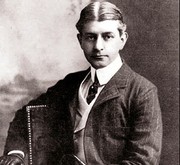
Frank Norris
Frank Norris, (1870-1902), was an American novelist and journalist and a leader of the Naturalism movement. Norris believed that a novel should serve a moral purpose. "The novel with a purpose," he explained, "brings the tragedies and griefs of others to notice" and "prove(s) that injustice, crime, and inequality do exist." Source
3 books
Frank O'Hara
Francis Russell O'Hara was an American poet who, along with John Ashbery, James Schuyler, Barbara Guest and Kenneth Koch, was a key member of the New York School of poetry. O'Hara's poetry is generally autobiographical, much of it based on observations on what is happening to him in the moment. Donald Allen says in his introduction to The Collected Poems of Frank O’Hara, “That Frank O’Hara tended to think of his poems as a record of his life is apparent in much of his work.” [2] O'Hara discusses this aspect of his poetry in a statement for Donald Allen's New American Poetry: “What is happening to me, allowing for lies and exaggerations which I try to avoid, goes into my poems. I don’t think my experiences are clarified or made beautiful for myself or anyone else, they are just there in whatever form I can find them.” He goes on to say, "My formal 'stance' is found at the crossroads where what I know and can't get meets what is left of that I know and can bear without hatred." He then says, "It may be that poetry makes life's nebulous events tangible to me and restores their detail; or conversely that poetry brings forth the intangible quality of incidents which are all too concrete and circumstantial. Or each on specific occasions, or both all the time."[3] Among his friends, O'Hara was known to treat poetry dismissively, as something to be done only in the moment. John Ashbery claims he witnessed O'Hara “Dashing the poems off at odd moments – in his office at the Museum of Modern Art, in the street at lunchtime or even in a room full of people – he would then put them away in drawers and cartons and half forget them.” [2] In 1959, he wrote a mock manifesto (originally published in Yugen in 1961) called "Personism: A Manifesto." In it, he explains his position on formal structure: "I don't ... like rhythm, assonance, all that stuff. You just go on your nerve. If someone's chasing you down the street with a knife you just run, you don't turn around and shout, 'Give it up! I was a track star for Mineola Prep.'" He also says, in response to an academic over-emphasis on form, "As for measure and other technical apparatus, that's just common sense: if you're going to buy a pair of pants you want them to be tight enough so everyone will want to go to bed with you. There's nothing metaphysical about it." He claims that on August 27, 1959, while talking to LeRoi Jones, he founded a movement called Personism which may be "the death of literature as we know it." He says, "It does not have to do with personality or intimacy, far from it! But to give you a vague idea, one of its minimal aspects is to address itself to one person (other than the poet himself), thus evoking overtones of love without destroying love's life-giving vulgarity, and sustaining the poet's feelings toward the poem while preventing love from distracting him into feeling about the person."[4] His poetry shows the influence of Abstract Expressionism, Surrealism, Russian poetry, and poets associated with French Symbolism. Ashbery says, “The poetry that meant the most to him when he began writing was either French – Rimbaud, Mallarmé, the Surrealists: poets who speak the language of every day into the reader’s dream – or Russian – Pasternak and especially Mayakovsky, for whom he picked up what James Schuyler has called the ‘intimate yell.’”[2] As part of the New York School of poetry, O'Hara to some degree encapsulated the compositional philosophy of New York School painters.[5][6] Ashbery says, “Frank O’Hara’s concept of the poem as the chronicle of the creative act that produces it was strengthened by his intimate experience of Pollock’s, Kline’s, and de Kooning’s great paintings of the late 40s and early 50s and of the imaginative realism of painters like Jane Freilicher and Larry Rivers.”[2] This interaction between poet and painter is most evident in the poem 'Why I am Not A Painter' in which O'Hara parallels the process of writing a poem called 'Oranges' with a description of his friend Mike Goldberg's creation of a painting entitled 'Sardines'. Both described works contain no internal reference to their title.
3 books
Frank Quitely
3 books
Frank Rudolph Young
3 books
Frank Schmalleger
3 books
Frank Suárez
3 books
Frank Wood
3 books

Franz Werfel
Austrian-Bohemian novelist, playwright and poet
3 books
Fred Banbery
3 books
Frédéric Beigbeder
3 books

Frederick Faust
Frederick Schiller Faust was born in Seattle. He was orphaned at an early age and raised in central California. He worked as a cowhand in the San Joaquin Valley, then went on to attend the University of California at Berkeley. He did not finish university, but did begin to write while there. After leaving university, he traveled, spent a year in the Canadian army, and then moved to New York City in 1916. He began writing for pulp magazines. In 1934 he started placing his fiction in slick magazines, and in 1938 he and his family moved to Hollywood, California, where he wrote film scripts for several studios. When World War II began he became a war correspondent. He died of shrapnel injuries during the war. Over the course of his life Faust wrote more than 500 novels for magazines and almost that many short stories as well. He is best known for his Western stories which he wrote under the pen name "Max Brand". Faust disparaged his commercial success and used his own name only for his poetry.
3 books
Frederick Herzberg
3 books
Frederic Martini
3 books

Frederic Morton
3 books