Authors
Page 411

Edward de Bono
Maltese physician who coined the term "lateral thinking"
17 books
Edward Derringh
1 book
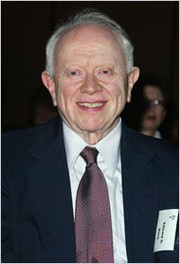
Edward D. Hoch
Longtime mystery writer and editor Edward Dentinger Hoch was practically an institution in the field. Born in 1930, he published over eight hundred mystery stories including one in every issue of Ellery Queen's Mystery Magazine from 1973 to 1981. His TV writing credits include episodes of "MacMillan and Wife", "Night Gallery", the "Alfred Hitchcock Show", and "Tales of the Unexpected". Mr. Hoch served as president of the Mystery Writers of America. He also wrote mysteries under the pseudonyms Anthony Circus, R.E. Porter and R.L. Stevens. Mr. Hoch died January 17, 2008. Source: http://histmyst.org/profiles.html
25 books
Edward Dimendberg
1 book
Edward Dolnick
1 book
Edward D. Schroeder
1 book
Edward Eager
9 books
Edward E. Baptist
Edward E. Baptist (born 1970) is an American academic and writer. He is a professor of history at Cornell University, located in Ithaca, New York, where he specializes in the history of the 19th-century United States, particularly the South. Thematically, he has been interested in the history of capitalism and has also been interested in digital humanities methodologies. He is the author of numerous books. Source: Edward E. Baptist on Wikipedia
1 book
Edward Eggleston
2 books
Edward E. Grazda
1 book
Edward E. Jacobs
2 books
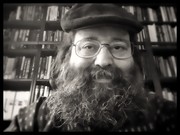
Edward E. Kramer
An award-winning editor and writer, Edward E. Kramer's published works includes Sandman with Neil Gaiman, Elric with Michael Moorcock, and The Crow with James O'Barr; he received the Prometheus Award for the Libertarian SF anthology Free Space, with Brad Linaweaver. Ed agented volumes of classic work for Harlan Ellison (Edgeworks), Fritz Leiber (Lankhmar), and Michael Moorcock (Eternal Champion). Ed arranged the literary partnership between authors Brian Herbert and Kevin J. Anderson which re-launched the Dune universe; the first Herbert / Anderson collaborative trilogy was dedicated to Ed's efforts. As a photojournalist and music critic, Ed's features were syndicated through the NY Times regional wire; his photography and portraits graced the pages of Billboard, Rolling Stone, Time, and USA Today. Ed's original fiction appears in numerous anthologies, collections, and magazines. In 1987, Ed founded America's largest annual pop-cultural event, Dragon Con, and served as Chairman for fourteen years. An active member of the Science Fiction Writer's Association (SFWA) for more than two decades, and a past Nebula Awards host, Ed also served as Vice-President and Trustee of the Horror Writers Association (HWA). A graduate of Emory University School of Medicine, Ed's work in Violence Epidemiology with the Centers for Disease Control (CDC) helped develop the technology to decrease fatalities through a pilot study for Atlanta's Domestic Crisis Intervention Unit (DCIU). His experience includes more than two decades of work as an administrator in the psychiatric and addiction treatment professions, and eight years as Producer of the Tovia Singer Show for Arutz Sheva, Israel's only independent national live radio station.
2 books
Edward E. Leslie
1 book
Edward Elmer
1 book
Edward Elmer Smith
1 book
Edward Elmer Smith
1 book
Edward E. Ruppert
2 books
Edward E. Shook
1 book

Edward E. Smith
Edward Smith was born in Sheboygan, Wisconsin, the son of staunch Presbyterians of British ancestry. The following winter, his family moved to Spokane, Washington, and, in 1902, to Seneaquoteen, Idaho, to farm. He received two degrees in Chemical Engineering from the University of Idaho in 1914. He married in 1915. One evening, while he and his wife were visiting friends, a discussion about space travel led to Smith agreeing to co-author a novel with one of the friends, although after getting about a third of the way through, they abandoned it. Smith went on to receive a Master's degree in Chemistry from George Washington University in 1917 and a doctorate in Chemical Engineering in 1918. In 1919, he became chief chemist for F. W. Stock & Sons of Hillsdale, Michigan. That same year he resumed writing his first novel, The Skylark of Space, which he finished in 1920, although multiple submissions failed to get it published until 1928. He continued to write and publish stories through the 1930s. In 1936 he took a job as a food technologist at the Dawn Doughnut Company of Jackson, Michigan, while continuing to write and sell fiction. During World War II, he worked for the U.S. Army, and after the war he took a job with the J. W. Allen Company, which he held until his professional retirement in 1957. After his retirement he and his wife moved to Clearwater, Florida in the winters and Seaside, Oregon in the summer. He continued to write until his death in 1965.
13 books
Edward E. Smith
1 book
Edward Espe Brown
2 books
Edward Evan Evans-Pritchard
1 book

Edward Everett Hale
2 books
Edward E. Wilson
2 books
Edward Ezewu
1 book
Edward Falco
2 books
Edward F. Connelly
1 book
Edward F. Edinger
2 books
Edward Feser
2 books
Edward Finegan
1 book
Edward Fitch
1 book
Edward Frederick Langley Russell
1 book

Edward Frenkel
Edward Vladimirovich Frenkel (Russian: Эдуáрд Влади́мирович Фре́нкель, sometimes spelled Э́двард Фре́нкель) is a Russian-American mathematician working in representation theory, algebraic geometry, and mathematical physics. He is a professor of mathematics at University of California, Berkeley, member of the American Academy of Arts and Sciences, and author of the bestselling book Love and Math. --Wikipedia Photo Attribution: Eget værk, Søren Fuglede Jørgensen, CC BY-SA 3.0, via Wikimedia Commons
1 book
Edward G. Amoroso
1 book
Edward Garnett
1 book
Edward Gauvin
1 book
Edward Geoffrey Parrinder
2 books
Edward G. Grabb
1 book
Edward G. Hoffman
1 book
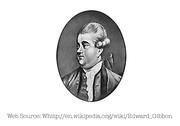
Edward Gibbon
1 book
Edward Gibbon
Edward Gibbs
1 book
Edward Glaeser
1 book
Edward Glaser
1 book
Edward G. Lengel
1 book
Edward G. Martin
1 book
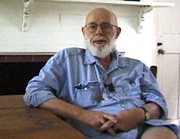
Edward Gorey
Edward Gorey was an American writer and artist noted for his macabre illustrated books. Gorey is typically described as an illustrator. His books can be found in the humor and cartoon sections of major bookstores, but books like The Object Lesson have earned serious critical respect as works of surrealist art. His experimentations — creating books that were wordless, books that were literally matchbox-sized, pop-up books, books entirely populated by inanimate objects — complicates matters still further. As Gorey told Richard Dyer of The Boston Globe, "Ideally, if anything [was] any good, it would be indescribable." Gorey classified his own work as literary nonsense, the genre made most famous by Lewis Carroll and Edward Lear. (Source: Wikipedia.)
20 books
Edward Gorman
American writer and short fiction anthologist.
24 books
Edward Granville Browne
1 book
Edward G. Robles Jr.
1 book