Authors
Page 415
Edward Swick
2 books
Edward Sylvester Morse
1 book
Edward Taylor
2 books
Edward Tenner
2 books
Edward T. Hall
2 books
Edward T. Haslam
2 books
Edward T. Howley
1 book
Edward T. Howley
1 book
Edward Tick
1 book
Edward Tse
1 book
Edward T. Welch
1 book
Edward T. White
2 books
Edward Twitchell Hall
4 books
Edward Tyas Cook
1 book
Edward Ullendorff
British scholar of Semitic languages and Ethiopian studies.
1 book
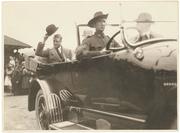
Edward VIII, Duke of Windsor
Edward VIII was King of the United Kingdom and the Dominions of the British Commonwealth, and Emperor of India, from 20 January 1936 until his abdication on 11 December 1936. - source
1 book
Edward V. Lewis
1 book
Edward Vose Gulick
1 book
Edward Wagenknecht
1 book
Edward Wallace
1 book
Edward W. Eichel
1 book
Edward Wellen
9 books
Edward Weston
2 books
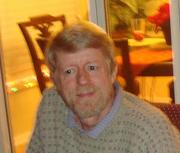
Edward W. Kamen
Edward W. Kamen was born in Mansfield, Ohio on October 2, 1945. He obtained the degree of Bachelor of Electrical Engineering from the Georgia Institute of Technology in 1967, and the Ph.D. in Electrical Engineering and Ph.D. minor in Mathematics from Stanford University in 1971. From 1971 to 1981 he was on the faculty at Georgia Tech, where he carried out basic research on the study of infinite-dimensional systems and linear time-varying systems. In 1981, Dr. Kamen moved to the University of Florida where his research centered on two-dimensional systems and adaptive control. In 1986, he became Professor and Chairman of the Department of Electrical Engineering at the University of Pittsburgh. In 1991, Dr. Kamen returned to Georgia Tech to assume the Julian T. Hightower endowed professorship. While at Tech, he was an Associate Director of the Manufacturing Research Center and the founding director of the Center for Board Assembly Research (CBAR), which dealt with both education and research involving printed circuit board assembly. In 2002, Dr. Kamen retired from Georgia Tech where he is now Professor Emeritus. He is author/co-author of over 100 journal and conference papers and four textbooks in the areas of signals, systems, controls, and manufacturing. For a listing of his major research publications, go to http://edwardwkamen.blogspot.com. Dr. Kamen was General Chairman of the 38th IEEE Conference on Decision and Control and he is a Life Fellow of the IEEE. During his 31 years as a university professor, he was the Ph.D. advisor of 28 students. For a list of the names of the graduates and their dissertation titles, go to http://genealogy.math.ndsu.nodak.edu/id.php?id=63601
1 book

Edward W. Kaugare
Edward Kaugare was born in Wedza,Zimbabwe in 1953. He was the first born in a family of six children. He was obsessed with reading novels and he was greatly inspired with works of great writters such as James Hardly Chase, Dennis Wheatly inter-alia. His great writting skills saw him nominated for literal awards. Besides being an author he worked as a printer at Edinburgh press for over a decade. Prior to his death he held the post of Production manager at Zimbabwe Publishing House. He died on the 11th of October 1995.
1 book

Edward W. Ludwig
1 book
Edward W. Minium
1 book
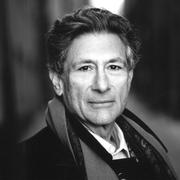
Edward W. Said
Edward Wadie Said (1 November 1935 – 24 September 2003) was a Palestinian and American academic, literary critic, and political activist. As a professor of literature at Columbia University, he was among the founders of post-colonial studies. As a cultural critic, Said is best known for his book Orientalism (1978), a foundational text which critiques the cultural representations that are the bases of Orientalism—how the Western world perceives the Orient. His model of textual analysis transformed the academic discourse of researchers in literary theory, literary criticism, and Middle Eastern studies.
14 books

Edward W. Soja
Edward William Soja (1940–2015) was a self-described "urbanist," a noted postmodern political geographer and urban theorist on the planning faculty at UCLA, where he was Distinguished Professor of Urban Planning, and the London School of Economics. He had a Ph.D. from Syracuse University. His early research focused on planning in Kenya, but Soja came to be known as the world's leading spatial theorist with a distinguished career writing on spatial formations and social justice. Source: <a href="https://en.wikipedia.org/wiki/Edward_Soja">Edward Soja</a> on Wikipedia (<a href="https://en.wikipedia.org/wiki/Wikipedia:Text_of_Creative_Commons_Attribution-ShareAlike_3.0_Unported_License">CC BY-SA 3.0</a>).
1 book
Edward W. Wagner
1 book
Edward Young
An English poet.
1 book
Edward Yourdon
1 book
Edward Zalisko
1 book
Edward Ziegler
1 book
Ed Warren
5 books
Ed Wheat
3 books
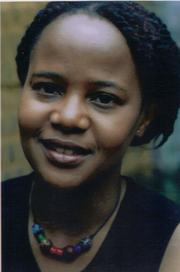
Edwidge Danticat
15 books

Edwin Abbott Abbott
Edwin Abbott Abbott (20 December 1838 – 12 October 1926), was an English schoolmaster and theologian, is best known as the author of the mathematical satire and religious allegory Flatland (1884). Source: Edwin Abbott Abbott on Wikipedia.
1 book
Edwin Abbott Abbott
Edwin A. Locke
1 book
Edwina Marlow
3 books
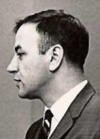
Edwina Noone
Edwina Noone is a pseudonym of Michael Avallone. Michael Angelo Avallone was a prolific American author of mystery, secret agent fiction, and novelizations of TV and films. His lifetime output was over 223 works (although he boasted over 1,000), published under his own name and 17 pseudonyms. Wikipedia
1 book
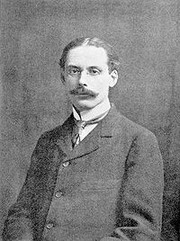
Edwin Arlington Robinson
6 books
Edwin Arlington Robinson
1 book
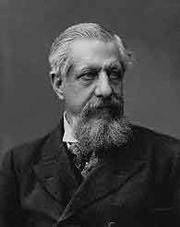
Edwin Arnold
Sir Edwin Arnold
2 books
Edwina Shore
5 books
Edwin Balmer
1 book
Edwin Bernbaum
1 book
Edwin B. Flippo
2 books
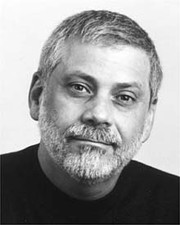
Edwin Black
Edwin Black is an American journalist and columnist (<a href=https://en.wikipedia.org/wiki/Edwin_Black>Wikipedia</a>, <a href=https://edwinblack.com>WWW</a>). Edwin Black is an American syndicated columnist and investigative journalist. He specializes in human rights, the historical interplay between economics and politics in the Middle East, petroleum policy, the abuses practiced by corporations, and the financial underpinnings of Nazi Germany. - Wikipedia
2 books