Authors
Page 43
Alfred Henry Lewis
1 book
Alfred Hitchcock
11 books

Alfred Jarry
Alfred Jarry (Laval, 8 de septiembre de 1873 - París, 1 de noviembre de 1907) fue un dramaturgo, novelista y poeta francés, conocido por sus hilarantes obras de teatro y su estilo de vida disoluto y excéntrico. Fuente: <a href="http://es.wikipedia.org/wiki/Alfred_Jarry#mediaviewer/Archivo:Alfred_Jarry.jpg">Wikipedia</a>
1 book
Alfred J Field
1 book
Alfred J. Field
1 book
Alfred J. Hitchcock
1 book

Alfred J. Kolatch
American rabbi
1 book
Alfred Kazin
Alfred Kazin was an American writer and literary critic, many of whose writings depicted the immigrant experience in early twentieth century America. - Wikipedia
1 book
Alfred Klemmt
1 book

Alfred Kubin
Alfred Leopold Isidor Kubin (10 April 1877 – 20 August 1959) was an Austrian printmaker, illustrator, and occasional writer. Kubin is considered an important representative of Symbolism and Expressionism. Source: Alfred Kubin on Wikipedia.
1 book
Alfred Lansing
2 books
Alfred Lord Tennyson
Alfred Tennyson, 1<sup>st</sup> Baron Tennyson, FRS, much better known as "Alfred, Lord Tennyson," was Poet Laureate of the United Kingdom during much of Queen Victoria's reign and remains one of the most popular poets in the English language. Tennyson excelled at penning short lyrics, "In the valley of Cauteretz", "Break, Break, Break", "The Charge of the Light Brigade", "Tears, Idle Tears" and "Crossing the Bar". Much of his verse was based on classical mythological themes, such as Ulysses, although In Memoriam A.H.H. was written to commemorate his best friend Arthur Hallam, a fellow poet and fellow student at Trinity College, Cambridge, who was engaged to Tennyson's sister, but died from a cerebral hemorrhage before they were married. Tennyson also wrote some notable blank verse including Idylls of the King, Ulysses, and Tithonus. During his career, Tennyson attempted drama, but his plays enjoyed little success. Tennyson wrote a number of phrases that have become commonplaces of the English language, including: "Nature, red in tooth and claw", "'Tis better to have loved and lost / Than never to have loved at all", "Theirs not to reason why, / Theirs but to do and die", "My strength is as the strength of ten, / Because my heart is pure", "Knowledge comes, but Wisdom lingers", and "The old order changeth, yielding place to new". He is the second most frequently quoted writer in The Oxford Dictionary of Quotations after Shakespeare.<sup>1</sup>
15 books
Alfred MacAdam
1 book
Alfred Marshall
2 books
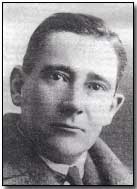
Alfred McLelland Burrage
Alfred McLelland Burrage was a British writer. He was noted in his time as an author of fiction for boys which he published under the pseudonym Frank Lelland, including a popular series called "Tufty". After his death, however, Burrage became best known for his ghost stories. - Wikipedia
5 books
Alfred Mill
1 book
Alfred N. Martin
1 book
Alfred North Whitehead
7 books
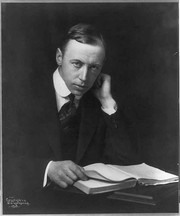
Alfred Noyes
An English poet.
3 books

Alfredo Bryce Echenique
Alfredo Marcelo Bryce Echenique (Lima, 1939-2026) fue un escritor peruano, célebre por novelas como Un mundo para Julius, La vida exagerada de Martín Romaña o No me esperen en abril. Alfredo Marcelo Bryce Echenique (Lima, 1939-2026) was a Peruvian writer, famous for novels such as Un mundo para Julius, La vida exagerada de Martín Romaña and No me esperen en abril.
1 book
Alfredo Corchado
1 book
Alfredo Gómez Cerdá
1 book
Alfredo Schifini
1 book
Alfredo Vea
1 book
Alfredo Véa
1 book
Alfred P. Donhauser
1 book
Alfred Perceval Graves
1 book
Alfred Percival Maudslay
1 book
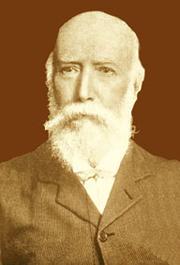
Alfred Percy Sinnett
2 books
Alfred Powell Morgan
1 book
Alfred P. Sloan Jr.
1 book
Alfred Rappaport
2 books
Alfred Rosa
1 book
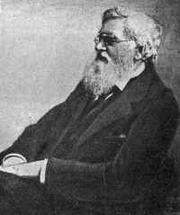
Alfred Russel Wallace
Alfred Russel Wallace was a British naturalist, explorer, geographer, anthropologist, and biologist. He is best known for independently conceiving the theory of evolution through natural selection; his paper on the subject was jointly published with some of Charles Darwin's writings in 1858. Wallace did extensive fieldwork, first in the Amazon River basin and then in the Malay Archipelago, where he identified the faunal divide now termed the Wallace Line, which separates the Indonesian archipelago into two distinct parts: a western portion in which the animals are largely of Asian origin, and an eastern portion where the fauna reflect Australasia. He was considered the 19th century's leading expert on the geographical distribution of animal species and is sometimes called the "father of biogeography" - wikipedia
1 book
Alfred Sheinwold
1 book
Alfred Sherwood Romer
1 book
Alfred Slote
3 books
Alfred Smith
1 book
Alfreds R. Jumikis
1 book
Alfred Thayer Mahan
United States Navy admiral and historian
2 books
Alfred Thompson Denning
2 books
Alfred Uhry
1 book
Alfred V. Aho
5 books
Alfred W. Crosby
3 books
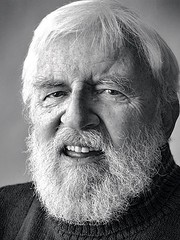
Alfred W. Crosby
Alfred Worcester Crosby (15 January 1931-) Alfred W. Crosby was born in Boston in 1931 where he still lives with his wife Barbara and daughter Carolyn Jane. He graduated from Harvard College in 1952 and served in the United States Army, stationed in Panama (1952-1955). After his army service he earned a Master in the Art of Teaching (M.A.T.) from the Harvard School of Education and a Doctor of Philosophy in history from Boston University in 1961. His dissertation was published as his first book, "America, Russia, Hemp, and Napoleon: a study of trade between the United States and Russia, 1783-1814" from the time of the American Revolution through the War of 1812. During his academic career he taught at Albion College, the Ohio State University, Washington State University, and finally the University of Texas at Austin. He retired from the University of Texas in 1999 as Professor Emeritus of Geography, History, and American Studies. His involvement in the Civil Rights movement, teaching Black Studies, helping to build a medical center for the United Farm Workers’ Union, and taking a leadership role in anti-Vietnam War demonstrations set him off in intellectually unorthodox directions. He became particularly interested in the histories of people who were victimized, economically exploited, or enslaved in the advance of European imperialism and capitalism, and thereby in the influence in that advance of nonpolitical, nonreligious, and largely ignored factors—especially infectious disease. All this did not make of him a Marxist radical, because—as he put it—he was not that much of an optimist. It did, however, inspire interest in demography and epidemiology, which led him to write several books—"The Columbian Exchange: Biological and Cultural Consequences of 1492" (1972); "America’s Forgotten Pandemic (originally Epidemic and Peace 1918)" (1976); and "Ecological Imperialism: The Biological Expansion of Europe, 900-1900" (1986). His fascination with several subdivisions of intellectual and technological history produced "The Measure of Reality: Quantification and Western Society, 1250-1600" (1997); "Throwing Fire: Projectile Technology Through History"; and "Children of the Sun: A History of Humanity’s Unappeasable Appetite for Energy". His work as a historian, he said, turned him from facing the past to facing the future.
3 books
Alfred Weber
1 book
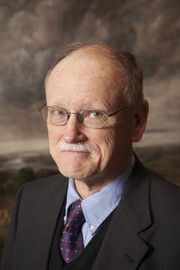
Alfred W. McCoy
4 books
Algarabia Algarabia
1 book
Algernon Blackwell
1 book