Authors
Page 633
Ishmael Reed
1 book
Ishrat Husain
1 book
Ishtiaq Husain Qureshi
1 book
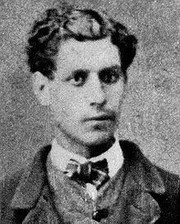
Isidore Lucien Ducasse
Comte de Lautréamont (French: [lotʁeamɔ̃]) was the pseudonym of Isidore-Lucien Ducasse (4 April 1846 – 24 November 1870), an Uruguayan-born French poet. His only works, Les Chants de Maldoror and Poésies, had a major influence on modern literature, particularly on the Surrealists and the Situationists. He died at the age of 24. [Wikipedia]
1 book
Isidore Okpewho
1 book
Isidoro Reguera Pérez
1 book
Isioma Ile
1 book
Isis Crawford
1 book
Isjoni
1 book
Isjoni Ishaq
2 books
Isla Fisher
1 book
Islam K. Islam
1 book
Ismael GALANCHO
1 book
Ismail bin Omar Abdul Aziz Pehin Datu Seri Maharaja Dato Seri Utama Awang Haji.
1 book

Ismail Kadare
13 books
Ismantoro Dwi Yuwono
1 book
Ismet Baswedan
1 book
Isobel Carr
1 book
Isobel Chace
Elizabeth Mary Teresa de Guise, née Hunter on 1934 in Nairobi, Kenya. She spent much of her years in Kenya and South Africa, and studied at the Open University. Her brother Alexander also wrote Western novels. After their parents' divorce, she and her sister, decided change their surname by de Guise. Elizabeth wrote under the pseudonym of Isobel Chace, and under her real names: Elizabeth Hunter and Elizabeth de Guise. She was a member of the Romantic Novelists' Association. Elizabeth passed away in 2005, at 70.
17 books
Isobel Finn
1 book
Isobelle Carmody
8 books
Isobelle Carmody
1 book
Isobel Linton
5 books
Isobel Pearson
1 book
Isobel Rainey de Diaz
1 book
Isocrates
1 book
Isozaki, Arata.
1 book
I. S. P. Nation
2 books
Israel Finkelstein
1 book
Israel Gutman
2 books
Israel Horovitz
1 book

Israel Joshua Singer
Polish American Yiddish novelist and translator
1 book
Israel Meir ha-Kohen
1 book
ISRAEL PLANAGUMÀ LÓPEZ
1 book
Israel Regardie
1 book
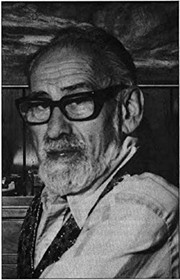
Israel Regardie
Francis Israel Regardie known simply as Israel Regardie (/ˈɪzriəl rᵻˈɡɑːrdi/), was an occultist, a writer, and Aleister Crowley's personal secretary and transcriptionist, widely known for his books and commentaries on the Hermetic Order of the Golden Dawn. ---Wikipedia
4 books
Israel) Teʾaṭron ha-Ḳibuts (Tel Aviv
1 book

Israel Zangwill
A British author at the forefront of cultural Zionism during the 19th century (<a href=https://en.wikipedia.org/wiki/Israel_Zangwill>Wikipedia</a>).
2 books

Isriani Hardini
1 book
Issa
1 book
Issa
1 book
Issa Rae
1 book
Isser Harel
1 book
Isser Woloch
1 book
Istvan Banyai
1 book
István Diószegi
1 book
Itabari Njeri
1 book
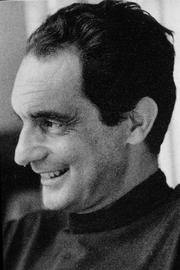
Italo Calvino
Italo Calvino (Santiago de Las Vegas de La Habana, 15 ottobre 1923 – Siena, 19 settembre 1985) è stato uno scrittore e paroliere italiano. Intellettuale di grande impegno politico, civile e culturale, è stato uno dei narratori italiani più importanti del secondo Novecento. I numerosi campi d'interesse toccati dal suo percorso letterario sono meditati e raccontati attraverso capolavori quali la trilogia de I nostri antenati, Marcovaldo, Le cosmicomiche, Se una notte d'inverno un viaggiatore, uniti dal filo conduttore della riflessione sulla storia e la società contemporanea. Italo Calvino (Italian: [ˈiːtalo kalˈviːno]; 15 October 1923 – 19 September 1985) was an Italian journalist and writer of short stories and novels. His best known works include the Our Ancestors trilogy (1952–1959), the Cosmicomics collection of short stories (1965), and the novels Invisible Cities (1972) and If on a winter's night a traveler (1979). Lionised in Britain and the United States, he was the most-translated contemporary Italian writer at the time of his death, and a noted contender for the Nobel Prize for Literature.
30 books
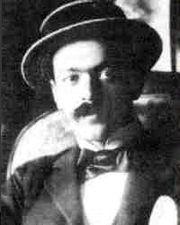
Italo Svevo
Aron Ettore Schmitz (December 19, 1861 – September 13, 1928), better known by the pseudonym Italo Svevo, was an Italian businessman and author of novels, plays, and short stories. Born in Trieste (then in Austria-Hungary) to a Jewish family, Italo Svevo (literally swabian Italian) wrote the classic novel La Coscienza di Zeno (rendered as Confessions of Zeno, or Zeno's Conscience) and self-published it in 1923. The work, showing the author's interest in the theories of Sigmund Freud, is written in the form of the memoirs of one Zeno Cosini, who writes them at the insistence of his psychoanalyst. Schmitz's psychoanalyst was Ottocaro Weiss, who had been trained by Freud in Vienna. Schmitz's novel received almost no attention from Italian readers and critics at the time. The work might have disappeared altogether if it were not for the efforts of James Joyce. Joyce had met Schmitz in 1907, when Joyce tutored him in English while working for Berlitz in Trieste. Joyce read Schmitz's earlier novel Senilità, which had also been largely ignored when published in 1898. Joyce championed Confessions of Zeno, helping to have it translated into French and then published in Paris, where critics praised it extravagantly. That led Italian critics, including Eugenio Montale, to discover it. Zeno Cosini, the book's hero, mirrored Schmitz, being a businessman fascinated by Freudian theory. Schmitz was also a model for Leopold Bloom, the protagonist of Joyce's Ulysses. Schmitz was a citizen of the Austro-Hungarian Empire until the end of the First World War. He spoke Italian as a second language (as he usually spoke the Triestine dialect, similar to Venetian) and, according to some critics, wrote it badly - though some have pointed out that it is not bad Italian, but rather the official Tuscan dialect in a Triestino mouth. Confessions of Zeno never looks outside the narrow confines of Trieste, much like Joyce's work, which rarely left Dublin in the last years of Ireland's time as part of the United Kingdom. Schmitz brings a keenly sardonic wit to his observations of Trieste and, in particular, to his hero, an indifferent man who cheats on his wife and lies to his psychoanalyst and who is trying to explain himself to his psychoanalyst by revisiting his memories. There is a final connection between Schmitz-Svevo and the character Cosini. Cosini sought psychoanalysis, he said, in order to discover why he was addicted to nicotine. As he reveals in his memoirs, each time he had given up smoking, with the iron resolve that this would be the "ultima sigaretta!!", he experienced the exhilarating feeling that he was now beginning life over without the burden of his old habits and mistakes. That feeling was, however, so strong that he found smoking irresistible, if only so that he could stop smoking again in order to experience that thrill once more. Svevo likewise smoked for all of his life. After being hit by a car while crossing the street, he was brought into hospital at Motta di Livenza, where his health rapidly failed. As death approached he asked one of his visitors for a cigarette, telling everyone that this really would be the last one (the request was denied). Svevo lived for part of his life in Charlton, south-east London, while working for a family firm. He documented this period in his letters to his wife which highlighted the cultural differences he encountered in Edwardian England. His old home at 67 Charlton Church Lane now carries a blue plaque.
2 books
Italy) Palazzo Ducale (Venice
1 book