Authors
Page 762

John Layman
John Steele Layman (born August 2, 1969) is an American comic book writer and letterer. Layman is most known for writing Chew, published by Image Comics. Source: John Layman on Wikipedia.
3 books
John L. Balderston
1 book
John L. Breen
1 book
John L. Byrne
1 book
John L. Comaroff
1 book
John le Carré

John le Carré
David John Moore Cornwell (19 October 1931 – 12 December 2020), better known by his pen name John le Carré was a British Irish author, best known for his espionage novels, many of which were successfully adapted for film or television. A "sophisticated, morally ambiguous writer", he is considered one of the greatest novelists of the postwar era. During the 1950s and 1960s, he worked for both the Security Service (MI5) and the Secret Intelligence Service (MI6). Near the end of his life, due to his strong disapproval of Brexit, he took out Irish citizenship, which was possible due to his having an Irish grandparent. Le Carré's third novel, The Spy Who Came in from the Cold (1963), became an international best-seller, was adapted as an award-winning film, and remains one of his best-known works. This success allowed him to leave MI6 to become a full-time author.[4] His novels which have been adapted for film or television include The Looking Glass War (1965), Tinker Tailor Soldier Spy (1974, 2011), Smiley's People (1979), The Little Drummer Girl (1983), The Night Manager (1993), The Tailor of Panama (1996), The Constant Gardener (2001), A Most Wanted Man (2008) and Our Kind of Traitor (2010). Philip Roth said that A Perfect Spy (1986) was "the best English novel since the war".
33 books
John Lee
6 books
John Lees
1 book
John LeFevre
1 book
John Lei
2 books
John L. Elias
1 book

John Lennon
John Winston Ono Lennon MBE was an English singer, songwriter and peace activist who co-founded the Beatles, the most commercially successful band in the history of popular music.
6 books
John Lennox
1 book
John L. Erlich
1 book
John Lescroart
1 book
John Leslie
1 book
John L. Esposito
4 books
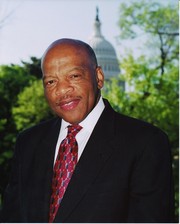
John Lewis
Often called "one of the most courageous persons the Civil Rights Movement ever produced," John Lewis has dedicated his life to protecting human rights, securing civil liberties, and building what he calls "The Beloved Community” in America. His dedication to the highest ethical standards and moral principles has won him the admiration of many of his colleagues on both sides of the aisle in the United States Congress. He has been called "the conscience of the U.S. Congress,” and Roll Call magazine has said, "John Lewis…is a genuine American hero and moral leader who commands widespread respect in the chamber.” He was born the son of sharecroppers on February 21, 1940, outside of Troy, Alabama. He grew up on his family's farm and attended segregated public schools in Pike County, Alabama. As a young boy, he was inspired by the activism surrounding the Montgomery Bus Boycott and the words of the Rev. Martin Luther King Jr., which he heard on radio broadcasts. In those pivotal moments, he made a decision to become a part of the Civil Rights Movement. Ever since then, he has remained at the vanguard of progressive social movements and the human rights struggle in the United States. As a student at Fisk University, John Lewis organized sit-in demonstrations at segregated lunch counters in Nashville, Tennessee. In 1961, he volunteered to participate in the Freedom Rides, which challenged segregation at interstate bus terminals across the South. Lewis risked his life on those Rides many times by simply sitting in seats reserved for white patrons. He was also beaten severely by angry mobs and arrested by police for challenging the injustice of Jim Crow segregation in the South. During the height of the Movement, from 1963 to 1966, Lewis was named Chairman of the Student Nonviolent Coordinating Committee (SNCC), which he helped form. SNCC was largely responsible for organizing student activism in the Movement, including sit-ins and other activities. While still a young man, John Lewis became a nationally recognized leader. By 1963, he was dubbed one of the Big Six leaders of the Civil Rights Movement. At the age of 23, he was an architect of and a keynote speaker at the historic March on Washington in August 1963. In 1964, John Lewis coordinated SNCC efforts to organize voter registration drives and community action programs during the Mississippi Freedom Summer. The following year, Lewis helped spearhead one of the most seminal moments of the Civil Rights Movement. Hosea Williams, another notable Civil Rights leader, and John Lewis led over 600 peaceful, orderly protestors across the Edmund Pettus Bridge in Selma, Alabama on March 7, 1965. They intended to march from Selma to Montgomery to demonstrate the need for voting rights in the state. The marchers were attacked by Alabama state troopers in a brutal confrontation that became known as "Bloody Sunday." News broadcasts and photographs revealing the senseless cruelty of the segregated South helped hasten the passage of the Voting Rights Act of 1965. Despite more than 40 arrests, physical attacks and serious injuries, John Lewis remained a devoted advocate of the philosophy of nonviolence. After leaving SNCC in 1966, he continued his commitment to the Civil Rights Movement as Associate Director of the Field Foundation and his participation in the Southern Regional Council's voter registration programs. Lewis went on to become the Director of the Voter Education Project (VEP). Under his leadership, the VEP transformed the nation's political climate by adding nearly four million minorities to the voter rolls. In 1977, John Lewis was appointed by President Jimmy Carter to direct more than 250,000 volunteers of ACTION, the federal volunteer agency. In 1981, he was elected to the Atlanta City Council. While serving on the Council, he was an advocate for ethics in government and neighborhood preservation. He was elected to Congress in November 1986 and has served as U.S. Representative of Georgia's Fifth Congressional District since then. He is Senior Chief Deputy Whip for the Democratic Party in leadership in the House, a member of the House Ways & Means Committee, and Chairman of its Subcommittee on Oversight. John Lewis holds a B.A. in Religion and Philosophy from Fisk University, and he is a graduate of the American Baptist Theological Seminary, both in Nashville, Tennessee. He has been awarded over 50 honorary degrees from prestigious colleges and universities throughout the United States, including Harvard University, Brown University, the University of Pennsylvania, Princeton University, Duke University, Morehouse College, Clark-Atlanta University, Howard University, Brandeis University, Columbia University, Fisk University, and Troy State University. John Lewis is the recipient of numerous awards from eminent national and international institutions, including the highest civilian honor granted by President Barack O
5 books
John Lewis Gaddis
John Lewis Gaddis (born 1941) is the Robert A. Lovett Professor of Military and Naval History at Yale University.
5 books
John L. Feirer
1 book
John L. Harper
1 book
John L. Hennessy
American computer scientist, academician and businessman who serves as Chairman of Alphabet Inc. and was past president of Stanford University.
5 books
John L. Hilburn
1 book
John L. Holland
1 book
John Lidzey
1 book
John Lie
1 book
John Lindow
1 book
John L. Ingraham
1 book
John List
1 book
John Lithgow
2 books
John Little
2 books
John L. Johnson
1 book
John Lloyd
British television producer and writer
5 books
John Lloyd Purdy
1 book
John L. Lund
1 book

John Locke
John Locke, widely known as the Father of Liberalism, was an English philosopher and physician regarded as one of the most influential of Enlightenment thinkers. Considered the first of the British empiricists, he is equally important to social contract theory. His work had a great impact upon the development of epistemology and political philosophy. His writings influenced Voltaire and Rousseau, many Scottish Enlightenment thinkers, as well as the American revolutionaries. His contributions to classical republicanism and liberal theory are reflected in the American Declaration of Independence. Locke's theory of mind is often cited as the origin of modern conceptions of identity and the self, figuring prominently in the work of later philosophers such as Hume, Rousseau and Kant. Locke was the first to define the self through a continuity of consciousness. He postulated that the mind was a blank slate or tabula rasa. Contrary to pre-existing Cartesian philosophy, he maintained that we are born without innate ideas, and that knowledge is instead determined only by experience derived from sense perception.<sup>1</sup>
6 books
John Lockman
1 book
John Lofland
1 book
John Lofland
2 books
John Loftus
1 book
John Loftus
1 book

John Long
Rock climber, adventurer, and author
1 book
John Loughery
2 books
John Louis Feirer
3 books
John L. Person
1 book
John L. Plaster
3 books
John L. Purdy
1 book
John L. Safko
1 book
John L. Sherrill
1 book