Authors
Page 794
Joseph Martos
1 book
Joseph Mathewson
1 book
Joseph M. Boggs
1 book
Joseph M. Crowley
1 book
Joseph Menn
2 books
Joseph Messinger
1 book
Joseph Migga Kizza
1 book

Joseph Mitchell
Joseph Quincy Mitchell (July 27, 1908 – May 24, 1996) was an American writer best known for his works of creative nonfiction he published in The New Yorker. His work primarily consists of character studies, where he used detailed portraits of people and events to highlight the commonplace of the world, especially in and around New York City. His book Up in the Old Hotel collects the best of his writing for The New Yorker. His last book was his empathetic account of the Greenwich Village street character and self-proclaimed historian Joe Gould, published as Joe Gould's Secret (1964).
3 books
Joseph M. Kadans
1 book
Joseph M. Murphy
1 book
Joseph M. Murphy
1 book
Joseph M. Murray
1 book
Joseph Moncure March
1 book
Joseph Monninger
1 book
Joseph M. Perillo
1 book
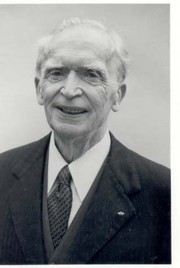
Joseph Murphy
Joseph Denis Murphy was an Irish author and New Thought minister, ordained in Divine Science and Religious Science.
28 books
Joseph M. Williams
2 books
Joseph Nassise
1 book
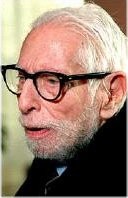
Joseph Nathan Kane
Joseph Nathan Kane (January 23, 1899 – September 22, 2002) was an American non-fiction writer, historian, and journalist. He is best known for being a researcher who found the person that did an event first and what products, services, and inventions were first to come about. His book Famous First Facts with later publications is a reference book used by academic and public libraries. He hosted a weekly national radio program in the 1930s on facts that were first and was an authority for quiz programs like The $64,000 Question and Break the Bank. He wrote 52 books that had to do with trivia and first facts. He was a consultant to various radio and television stations as well as to the United States Congress, the White House, and the Department of the Interior. His last work was about Walter Hunt, who he believes is actually the true inventor of the modern fountain pen, the common sewing machine, and the American safety pin. source
1 book
Joseph Needham
2 books

Joseph Nguyen
2 books
Joseph Nicolosi
3 books
Joseph Nocera
1 book
Joseph Norman Ngulube
1 book
Joseph N. Tylenda
1 book
Joseph O'Connor
2 books
Joseph Olshan
1 book
Joseph O'Neill
1 book
Joseph Ornato
1 book
Joseph P. Anthony
1 book
Joseph Parent
1 book
Joseph Patrick Henrich
2 books
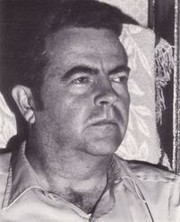
Joseph Payne Brennan
1 book
Joseph P. Buckley
1 book
Joseph Pear
1 book
Joseph P. Farrell
1 book
Joseph P. Folger
2 books
Joseph P. Forgas
1 book
Joseph P. Hou
1 book
Joseph Piercy
1 book
Joseph P. Laycock
1 book
Joseph Ponthus
1 book
Joseph Porter
1 book
Joseph P. Shapiro
1 book
Joseph Puleo
1 book
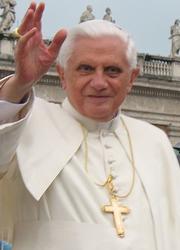
Joseph Ratzinger
Joseph Alois Ratzinger was born in Marktl, Bavaria, Germany, the son of a police officer. At the age of five, he declared that he wanted to be a cardinal. In 1941, he was conscripted into the Hitler Youth, which was mandatory, although his father believe that Nazism conflicted with the Catholic faith. In 1943, while in seminary, he was drafted into the German anti-aircraft corps, although he deserted in 1945. When he returned home he was imprisoned in a POW camp, and returned to the seminary when he was released after a few months. He was ordained in 1951. In 1958 Ratzinger became a professor of Freising College. He moved to the University of Bonn in 1959, the University of Münster in 1963, and the University of Tübingen in 1966, where he was appointed to a chair in dogmatic theology. While he was at Tübingen he witnessed the student movements of the 1960s, which culminated in disturbances and riots in spring of 1968. Although he was seen as a dogmatic reformist, he believed that the radicalization of the student body was a result of a departure from traditional Catholic teachings. In 1969, Ratzinger was moved to the University of Regensburg in Bavaria. In 1972 he co-founded the theological journal Communio. In 1977, Ratzinger was appointed Archbishop of Munich and Freising. That same year he was named Cardinal-Priest of Santa Maria Consolatrice al Tiburtino by Pope Paul VI. In 1981, Pope John Paul II named Ratzinger Prefect of the Sacred Congregation for the Doctrine of the Faith, and he resigned his post at Munich. In 1993 he became Cardinal Bishop of Velletri-Segni. In 2005, he was elected as the next Pope. He chose for himself the name Pope Benedict XVI.
9 books
Joseph R Biden
1 book
Joseph R. Biden
1 book
Joseph R. Davis
1 book
Joseph R. DesJardins
2 books