Authors
Page 833
Karla McLaren
2 books
Karl A. Menninger
3 books
Karl A. Pillemer
1 book
Karla Roberson
1 book
Karl A. Schleunes
1 book
Karla Sorensen
2 books
Karla Starr
1 book
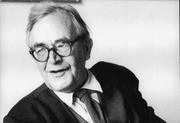
Karl Barth
Swiss Protestant theologian
3 books
Karl Berry
1 book
Karl Coryat
1 book
Karl C. Sandberg
1 book
Karl Deisseroth
1 book
Karl Detzer
1 book
Karl Doghramji
1 book
Karl E. Case
2 books
Karle Dickerson
2 books

Karl Edward Wagner
American writer, poet, editor, and publisher of horror, science fiction, and heroic fantasy,
8 books
Karleen Bradford
1 book
Karleen Koen
3 books
Karlene Faith
1 book
Karl Erik Wärneryd
1 book
Karl Ernest Meyer
1 book
Karl Ernst Christoph Schneider
1 book

Karl Evanzz
1 book
Karl E. Weick
2 books
Karl F. Kuhn
1 book
Karl Frank Lagler
1 book
Karl Fulves
1 book
Karl Geiringer
1 book
Karl Gerstner
1 book
Karl G. Heider
1 book
Karl-heinz Frieser
1 book

Karl-Herbert Scheer
1 book
Karl Hermann Weise
1 book
Karlien Vanderheyden
1 book
Karlin Sloan
1 book
Karl I. Payne
1 book

Karl Jaspers
"Karl Jaspers (1883–1969) began his academic career working as a psychiatrist and, after a period of transition, he converted to philosophy in the early 1920s. Throughout the middle decades of the twentieth century he exercised considerable influence on a number of areas of philosophical inquiry: especially on epistemology, the philosophy of religion, and political theory. His philosophy has its foundation in a subjective-experiential transformation of Kantian philosophy, which reconstructs Kantian transcendentalism as a doctrine of particular experience and spontaneous freedom, and emphasizes the constitutive importance of lived existence for authentic knowledge. Jaspers obtained his widest influence, not through his philosophy, but through his writings on governmental conditions in Germany, and after the collapse of National Socialist regime he emerged as a powerful spokesperson for moral-democratic education and reorientation in the Federal Republic of Germany. Despite his importance in the evolution of both philosophy and political theory in twentieth-century Germany, today Jaspers is a neglected thinker. He did not found a particular philosophical school, he did not attract a cohort of apostles, and, outside Germany at least, his works are not often the subject of high philosophical discussion. This is partly the result of the fact that the philosophers who now enjoy undisputed dominance in modern German philosophical history, especially Martin Heidegger, Georg Lukács and Theodor W. Adorno, wrote disparagingly about Jaspers, and they were often unwilling to take his work entirely seriously. To a perhaps still greater extent, however, his relative marginality is due to the fact that he is associated with the more prosaic periods of German political life, and his name is tarred with an aura of staid bourgeois common sense. Nonetheless, Jaspers' work set the parameters for a number of different philosophical debates, the consequences of which remain deeply influential in contemporary philosophy, and in recent years there have been signs that a more favourable reconstructive approach to his work is beginning to prevail." —Quoted from the Stanford Encyclopedia of Philosophy.
2 books
Karl Jay Shapiro
4 books
Karl J. Fields
1 book
Karl J. Smith
1 book
Karl Keating
1 book
Karl Kerényi
2 books
Karl Kesel
1 book
Karl Klindworth
German musician
2 books
Karl Kroeber
1 book
Karl Lagerfeld
1 book
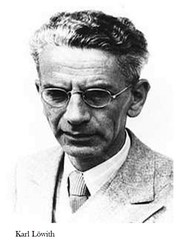
Karl Löwith
German philosopher
1 book
Karl Maier
1 book
Karl Maramorosch
Austrian-born American virologist, entomologist, and plant pathologist
1 book