Authors
Page 185
Brian C. Muraresku
1 book
Brian Cody
1 book
Brian Cogan
1 book
Brian Cole
1 book

Brian Cox
Brian Edward Cox CBE FRS (born 3 March 1968) is an English physicist and musician who is a professor of particle physics in the School of Physics and Astronomy at the University of Manchester[2][3] and The Royal Society Professor for Public Engagement in Science.[4] He is best known to the public as the presenter of science programmes, especially BBC Radio 4’s The Infinite Monkey Cage and the Wonders of... series[5][6] and for popular science books, such as Why Does E=mc²? and The Quantum Universe.
4 books
Brian Cruver
1 book
Brian Curtis
1 book

Brian Daley
Brian Charles Daley (December 22, 1947 – February 11, 1996) was an American science fiction novelist. He also adapted for radio the Star Wars radio dramas and wrote all of its episodes.
4 books
Brian David Burrell
1 book
Brian Day
1 book
Brian Dear
1 book
Brian DeLeeuw
1 book
Brian Dennis
1 book
Brian Desmond
1 book
brian d foy
1 book
Brian Dolan
2 books
Brian Doyle
Canadian children's writer
1 book
Brian E. Kelly
1 book
Brian E. Kramer
1 book
Brian Eno
1 book
Brian Evans
1 book
Brian Evenson
5 books

Brian Evenson
Brian Evenson is the author of over a dozen books of fiction, most recently the story collection A Collapse of Horses. He has been a finalist for the Shirley Jackson Award three times. His novel Last Days won the American Library Association’s award for Best Horror Novel of 2009. His novel The Open Curtain was a finalist for an Edgar Award and an International Horror Guild Award, and has just been rereleased by Coffee House Press. He is the recipient of three O. Henry Prizes as well as an NEA fellowship. He lives in Valencia, California, and works at CalArts. — Children of Lovecraft
3 books
Brian Falkner
1 book
Brian Farrell
1 book
Brian Farrington
1 book
Brian Faulkner
1 book
Brian Fawcett
1 book
Brian Fawcett
2 books
Brian Fies
1 book

Brian Floca
Brian Floca is an American writer and illustrator of children's books. He is best known for illustrating books written by Avi and for nonfiction picture books. In 2014, he won the Caldecott Medal for his book, Locomotive, as well as the Robert F. Sibert Informational Book Award Honor. https://en.wikipedia.org/wiki/Brian_Floca
2 books
Brian Flynn
English author of many detective novels featuring Anthony Bathurst (<a href=http://gadetection.pbworks.com/w/page/7930594/Flynn,%20Brian>more</a>).
1 book
Brian Francis
1 book
Brian Francis Slattery
1 book
Brian Freeman
3 books
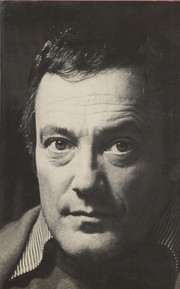
Brian Freemantle
Brian Harry Freemantle is an English journalist, and editor who turned to writing thrillers and non-fiction, known for his 1977 spy novel Charlie M.
1 book
Brian Friel
Irish dramatist, short story writer and founder of the Field Day Theatre Company.
3 books
Brian Froud
7 books
Brian F. Shaw
1 book
Brian F. Walker
1 book
Brian F Woodfield
1 book
Brian Gardner
1 book
Brian Gardner
1 book
Brian Gardner
1 book
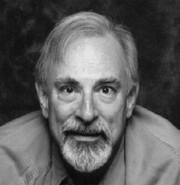
Brian Garfield
Brian Francis Wynne Garfield is an American novelist and screenwriter. He wrote his first published book at the age of eighteen and wrote several novels under such pen names as "Frank Wynne" and "'Brian Wynne" before gaining prominence when his book Hopscotch (1975) won the 1976 Edgar Award for Best Novel. - Wikipedia
4 books
Brian Gleeson
1 book
Brian Goetz
1 book
Brian Grazer
1 book

Brian Greene
Brian Randolph Greene (born February 9, 1963) is an American physicist known for his research on string theory. He is a professor of physics and mathematics at Columbia University, director of its center for theoretical physics, and the chairman of the World Science Festival, which he co-founded in 2008. Greene co-discovered mirror symmetry, relating two different Calabi–Yau manifolds. He also described the flop transition, a mild form of topology change, and the conifold transition, a more severe transformation of space, showing that topology can smoothly change in string theory. His books The Elegant Universe (1999, finalist for the Pulitzer Prize), The Fabric of the Cosmos (2004), The Hidden Reality (2011), and Until the End of Time (2020) were all top 10 New York Times bestsellers.
5 books
Brian Griffith
1 book