Authors
Page 460
Ernest Dale
1 book
Ernest Davis
1 book
Ernest Dimnet
1 book
Ernest Drake
3 books
Ernest Ensor Publius Ovidius Naso
1 book
Ernest F. Haeussler
1 book
Ernest Freeberg
1 book

Ernest Gellner
Ernest Gellner (9 December 1925 – 5 November 1995) was a British-Czech philosopher and social anthropologist described by The Daily Telegraph, when he died, as one of the world's most vigorous intellectuals, and by The Independent as a "one-man crusader for critical rationalism". His first book, Words and Things (1959), prompted a leader in The Times and a month-long correspondence on its letters page over his attack on linguistic philosophy. As the Professor of Philosophy, Logic and Scientific Method at the London School of Economics for 22 years, the William Wyse Professor of Social Anthropology at the University of Cambridge for eight years, and head of the new Centre for the Study of Nationalism in Prague, Gellner fought all his life—in his writing, teaching and political activism—against what he saw as closed systems of thought, particularly communism, psychoanalysis, relativism and the dictatorship of the free market. Among other issues in social thought, modernization theory and nationalism were two of his central themes, his multicultural perspective allowing him to work within the subject-matter of three separate civilizations: Western, Islamic, and Russian. He is considered one of the leading theoreticians on the issue of nationalism. Source: <a href="https://en.wikipedia.org/wiki/Ernest_Gellner" target="blanck">Ernest Gellner</a> on Wikipedia (Wikipedia contributors, <a href="https://en.wikipedia.org/wiki/Wikipedia:Text_of_Creative_Commons_Attribution-ShareAlike_3.0_Unported_License" target="blanck">CC BY-SA 3.0</a>)
1 book
Ernest Gordon
1 book

Ernest Hemingway
Ernest Miller Hemingway was an American writer and journalist. During his lifetime he wrote and had published seven novels; six collections of short stories; and two works of non-fiction. Since his death three novels, four collections of short stories, and three non-fiction autobiographical works have been published. Hemingway received the Nobel Prize in Literature in 1954. Hemingway was born and raised in Oak Park, Illinois. After high school he worked as a reporter but within months he left for the Italian front to be an ambulance driver in World War I. He was seriously injured and returned home within the year. He married his first wife Hadley Richardson in 1922 and moved to Paris, where he worked as a foreign correspondent. During this time Hemingway met, and was influenced by, writers and artists of the 1920s expatriate community known as the "Lost Generation". In 1924 Hemingway wrote his first novel, The Sun Also Rises. In the late 1920s, Hemingway divorced Hadley, married his second wife Pauline Pfeiffer, and moved to Key West, Florida. In 1937 Hemingway went to Spain as a war correspondent to cover the Spanish Civil War. After the war he divorced Pauline, married his third wife Martha Gellhorn, wrote For Whom the Bell Tolls, and moved to Cuba. Hemingway covered World War II in Europe and he was present at Operation Overlord. Later he was in Paris during the liberation of Paris. After the war, he divorced again, married his fourth wife Mary Welsh Hemingway, and wrote Across the River and Into the Trees. Two years later, The Old Man and the Sea was published in 1952. Nine years later, after moving from Cuba to Idaho, he committed suicide in the summer of 1961. Hemingway produced most of his work between the mid 1920s and the mid 1950s, though a number of unfinished works were published posthumously. Hemingway's distinctive writing style is characterized by economy and understatement, and had a significant influence on the development of twentieth-century fiction writing. His protagonists are typically stoical men who exhibit an ideal described as "grace under pressure." Many of his works are now considered classics of American literature. During his lifetime, Hemingway's popularity peaked after the publication of The Old Man and the Sea. 1 Source and more information: https://en.wikipedia.org/wiki/Ernest_Hemingway
47 books
Ernest Hemingway
Ernest Henry Griset
1 book
Ernest Hogan
1 book

Ernest Howard Crosby
reformer, georgist, and author
1 book

Ernest H. Shepard
6 books
Ernestine Gilbreth Carey
5 books
Ernestine Kopp
1 book
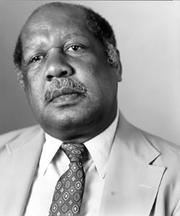
Ernest J. Gaines
Ernest J. Gaines was born on a plantation in Pointe Coupee Parish, Louisiana, the oldest of 12 children. His parents moved to Vallejo, California during World War II, so he was raised by his aunt, who was crippled and limited to crawling to get around. His was the fifth generation of share croppers to live on the plantation, and his family lived in a house that had formerly been slave quarters. During the summers, he picked cotton, and during the winters he was educated at the the plantation church. He spent three years at St. Augustine School, a Catholic school for African Americans in New Roads, but his education ended at the eighth grade because there was no further education offered to African-American children at that time. So, he joined his mother and stepfather in Vallejo, California. He wrote his first novel, Catherine Carmier, at age 17, and a rewritten version of it was published in 1964. In the meantime, his first short story, "The Turtles", was published in a college magazine at San Francisco State University in 1956. In 1957 he received a degree in literature from SFSU. After spending two years in the Army, he won a writing fellowship to Stanford University. Since 1984, Gaines has spent the first half of every year in San Francisco and the second half in Lafayette, where he teaches a creative writing workshop every autumn at the University of Louisiana at Lafayette. When in Louisiana, he and his wife live in a home built on the plantation where he grew up. His 1993 novel, A Lesson Before Dying, won the National Book Critics Circle Award for fiction. Gaines has been a MacArthur Foundation fellow, awarded the National Humanities Medal, and inducted into the French Ordre des Arts et des Lettres (Order of Arts and Letters) as a Chevalier.
5 books
ernest jones
1 book
Ernest Jones
Undifferentiated
1 book
Ernest Jones
1 book
Ernest Joyce
1 book

Ernest K. Gann
Image source: https://www.uh.edu/engines/gannpictures.htm
2 books
Ernest Klein
1 book
Ernest Kurtz
1 book
Ernest Lawrence Thayer
3 books
Ernest L. Martin
1 book
Ernest L. Nichols Jr.
1 book
Ernest L. Norman
1 book

Ernest L. Rossi
2 books

Ernest Matthew Mickler
2 books

Ernest Nagel
American logician and philosopher
2 books
Ernest Newbrun
1 book
Ernesto A. Franco
1 book
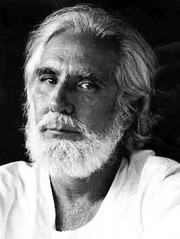
Ernesto Cardenal
2 books
Ernest O. Doebelin
1 book
Ernesto Galarza
1 book
Ernesto Galarza
1 book
Ernesto Guida
1 book
Ernesto Pujols
1 book
Ernesto Quiñonez
2 books
Ernesto Sabato
Ernesto Sabato (Rojas, Buenos Aires, 24 de junio de 1911-Santos Lugares, Buenos Aires, 30 de abril de 2011) fue un escritor, pintor y físico argentino. Su obra narrativa consiste en tres novelas: El túnel, Sobre héroes y tumbas y Abaddón el exterminador. También se destacó como ensayista en libros como Uno y el Universo, Hombres y engranajes, El escritor y sus fantasmas y Apologías y rechazos, en los que reflexiona sobre la condición humana, la vocación de la escritura o los problemas culturales del siglo XX. Fue el segundo argentino galardonado con el Premio Miguel de Cervantes (1984), después de Jorge Luis Borges (1979). Ernesto Sabato (Rojas, Buenos Aires, June 24, 1911 - Santos Lugares, Buenos Aires, April 30, 2011) was an Argentine writer, painter, and physicist. His narrative work consists of three novels: The Tunnel, On Heroes and Tombs, and Abaddon the Exterminator. He also stood out as an essayist with books such as One and the Universe, Men and Gears, The Writer and His Ghosts, and Apologies and Rejections, in which he reflects on the human condition, the vocation of writing, and the cultural problems of the 20th century. He was the second Argentine to be awarded the Miguel de Cervantes Prize (1984), after Jorge Luis Borges (1979).
4 books
Ernesto; Wright, Ann (translator) Guevara
1 book
Ernest P. Chan
1 book

Ernest Renan
Joseph Ernest Renan (27 February 1823 – 2 October 1892) was a French Orientalist and Semitic scholar, expert of Semitic languages and civilizations, historian of religion, philologist, philosopher, biblical scholar and critic. He wrote influential and pioneering historical works on the origins of early Christianity, and espoused popular political theories especially concerning nationalism and national identity. Renan is credited as being among the first scholars to advance the Khazar theory, which helds that Ashkenazi Jews were descendants of the Khazars, Turkic peoples who had adopted Jewish religion and migrated to Western Europe following the collapse of their khanate. Source: Ernest Renan on Wikipedia
1 book
Ernest Riera
1 book
Ernest Riera Arbussà
2 books
Ernest R. Norling
2 books
Ernest Ropiequet Hilgard
see https://openlibrary.org/authors/OL723506A
2 books
Ernest R. Weidhaas
1 book