Authors
Page 461
Ernest Shelton
1 book

Ernest Shiu-jen Kuh
Ernest Kuh was born on 2 October 1928 in Beijing, China, but political instability led to his family moving frequently, eventually to Shanghai in 1937. Ten years later, he took a slow boat to the US in order to continue his studies. He advanced with them with great rapidity, securing a BS in electrical engineering from the University of Michigan in 1949, a master’s from the Massachusetts Institute of Technology in 1950 and then a PhD in network theory from Stanford University in 1952. His doctoral thesis, most unusually, was published in the Journal of Applied Physics. Upon completing his studies, Professor Kuh worked for Bell Laboratories in Murray Hill, New Jersey. It was the only job he had applied for, and he would be only the second Chinese employee of the firm. He specialised in telephone infrastructure, and some of his work was incorporated into the first transatlantic cable, laid in 1956. In the same year, however, Professor Kuh returned to the academy at the University of California, Berkeley, where he would become a pioneer in bioengineering and in the application of digital computing methods to circuit design. He was to remain at Berkeley for the rest of his working life, retiring in 1992 as William S. Floyd Jr. distinguished professor. He served as chair of the department of electrical engineering and computer sciences from 1968 to 1972 and then as dean of the College of Engineering from 1973 to 1980, when he decided to step down from the post and concentrate on the emerging field of electronic design automation (EDA). This work laid some of the foundations for the vital new fields of computer-aided design and manufacturing. “Professor Kuh has been one of the key founding fathers of the EDA industry,” said his former student Chi-Ping Hsu, now senior vice-president and chief strategy officer of Cadence Design Systems. “Many of the early EDA companies were formed by his students and fellow researchers.” In 1973, Professor Kuh had a chance to reconnect with his Chinese roots as part of a month-long trip to mainland China by a delegation of Berkeley professors. He was to go back many more times, develop a number of collaborative projects and receive six honorary professorships as well as honorary doctorates from the Hong Kong University of Science and Technology and the National Chiao Tung University in Taiwan. Professor Kuh died on 27 June and is survived by his wife Bettine, two sons and three grandsons.
1 book

Ernest Shurtleff Holmes
Ernest Shurtleff Holmes was the founder of Religious Science, or the Science of Mind movement.
5 books
Ernest Small
1 book
Ernest S. Wolf
1 book

Ernest Thompson Seton
1 book
Ernest T. Stringer
1 book
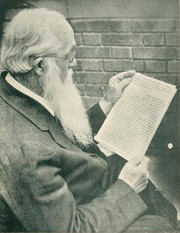
Ernest Vincent Wright
American author, poet and U.S. Navy musician best known for 1939's Gadsby, a novel written without the letter "e".
1 book
Ernest W. April
1 book
Ernest William Hobson
1 book
Ernest William Watson
1 book
Ernest W. Maglischo
2 books
Ernest Wright
1 book
Ernie Chan
1 book
Ernie Colon
1 book
Ernie Colón
1 book

Ernie Pyle
Ernest Taylor Pyle (August 3, 1900 – April 18, 1945) was a Pulitzer Prize–winning American journalist and war correspondent who is best known for his stories about ordinary American soldiers during World War II.
1 book
Ernie Wasson
1 book
Ernst Breisach
1 book
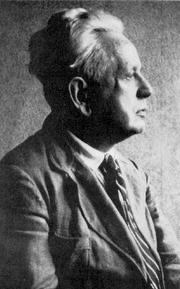
Ernst Cassirer
Ernst Cassirer was a German philosopher. Trained within the Neo-Kantian Marburg School, he initially followed his mentor Hermann Cohen in attempting to supply an idealistic philosophy of science; after Cohen's death, he developed a theory of symbolism, and used it to expand phenomenology of knowledge into a more general philosophy of culture. He is one of the leading 20th century advocates of philosophical idealism. At Hamburg Cassirer discovered the Library of the Cultural Sciences founded by Aby Warburg. Warburg was an art historian who was particularly interested in ritual and myth as sources of surviving forms of emotional expression. In Philosophy of Symbolic Forms (1923–1929) Cassirer argues that man (as he put it in his more popular 1944 book Essay on Man) is a "symbolic animal". Whereas animals perceive their world by instincts and direct sensory perception, humans create a universe of symbolic meanings. Cassirer is particularly interested in natural language and myth. He argues that science and mathematics developed from natural language, and religion and art from myth.
2 books
Ernst E. Hirsch
1 book

Ernst Friedrich
German anarchist and pacifist
1 book
Ernst G. Frankel
1 book
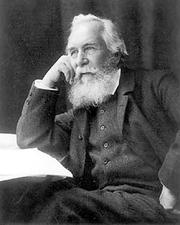
Ernst Heinrich Philipp August Haeckel
1 book
Ernst Jorgensen
1 book
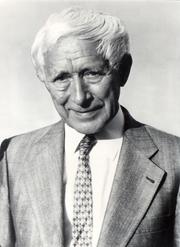
Ernst Jünger
Ernst Jünger (* 29. März 1895 in Heidelberg; † 17. Februar 1998 in Riedlingen) war ein deutscher Schriftsteller, dessen Persönlichkeit und Werk durch die Teilnahme am Ersten Weltkrieg geprägt wurden. Er ist vor allem durch Kriegserlebnisbücher wie In Stahlgewittern, phantastische Romane und Erzählungen sowie verschiedene Essays bekannt. Daneben stellen ausführliche Tagebücher aus dem Ersten und Zweiten Weltkrieg sowie aus der späteren Bundesrepublik einen wesentlichen Teil seines Werkes dar. Ernst Jünger (born March 29, 1895, in Heidelberg; died February 17, 1998, in Riedlingen) was a German writer whose personality and work were shaped by his participation in the First World War. He is best known for his wartime memoirs, such as Storm of Steel, fantastic novels and short stories, and various essays. Extensive diaries from the First and Second World Wars, as well as from the later Federal Republic of Germany, also constitute a significant part of his work.
3 books
Ernst Karl Christian Bach
1 book

Ernst Klee
German writer
1 book
Ernst Kris
1 book
Ernst Lehner
2 books
Ernst Leumann
1 book
Ernst Ludwig Kirchner
1 book
Ernst L. Winnacker
1 book
Ernst Mayr
2 books
Ernst Neufert
1 book
Ernst Neufert
1 book
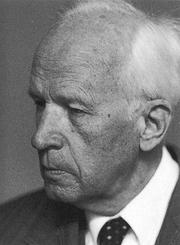
Ernst Nolte
German historian and philosopher
1 book

Ernst Toller
German playwright
1 book
Ernst Topitsch
1 book
Ernst Utrecht
3 books
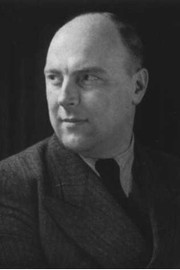
Ernst von Salomon
German writer and right-wing Freikorps member
1 book
Erode Subramanian Raja Gopal
1 book
E. Rosemarie Widmaier
1 book
Eros Keith
1 book
Eros S. Atalia
3 books
Erotic Print Society
1 book
Erotic Signature
2 books
Erotic Signature .
1 book
E. R. Punshon
Ernest Robertson Punshon (1872-1956) was an English author who wrote prolifically in a number of genres, but who is today chiefly remembered for his crime fiction. His mystery novels are appreciated by connoisseurs for their intricate plots, memorable atmospheres and substantial characters.
1 book
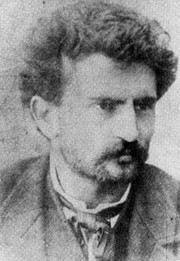
Errico Malatesta
Italian anarchist
1 book