Authors
Page 482
Fitz-James O'Brien
5 books
Fitzmyer, Joseph A.
2 books
Fitzroy MacLean
1 book
Fitzwilliam, William Charles de Meuron Earl
1 book
Fizzy Diamond
1 book
F. Jacquelyn Hallquist
1 book
F. James Holler
1 book
F. James Rohlf
American biostatistician, and professor at Stony Brook University
2 books
F. Javier Nieto
1 book
F. J. McGuigan
2 books
F. J. Salfeld
1 book
F.K. Levy
1 book
F. K. North
1 book
Flag Institute
1 book
Flam
1 book
Flannery Oconnor
1 book
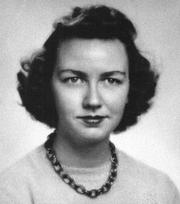
Flannery O'Connor
O'Connor was American writer, particularly acclaimed for her stories which combined comic with tragic and brutal. Along with authors like Carson McCullers and Eudora Welty, Flannery O'Connor belonged to the Southern Gothic tradition that focused on the decaying South and its damned people. O'Connor's body of work was small, consisting of only thirty-one stories, two novels, and some speeches and letters. (Source.)
19 books
Flann O'Brien
Brian O'Nolan was an Irish novelist and satirist, best known for his novels At Swim-Two-Birds and The Third Policeman written under the nom de plume Flann O'Brien. He also wrote the novel An Béal Bocht as well as many satirical columns in the Irish Times under the name Myles na gCopaleen. He was born in Strabane, County Tyrone. Most of O'Nolan's writings were occasional pieces published in periodicals, which explains why his work has only recently come to enjoy the considered attention of literary scholars. O'Nolan was also notorious for his prolific use and creation of pseudonyms for much of his writing, including short stories, essays, and letters to editors, which has rendered a complete cataloging of his writings an almost impossible task—he allegedly would write letters to the Editor of the Irish Times complaining about his own articles published in that newspaper, for example in his regular Cruiskeen Lawn column, which gave rise to rampant speculation as to whether the author of a published letter existed or not. Not surprisingly, little of O'Nolan's pseudonymous activity has been verified. A key feature of O'Nolan's personal situation was his status as an Irish government civil servant, who, as a result of his father's relatively early death, was obliged to support ten siblings, including an older brother who was an unsuccessful writer. Given the desperate poverty of Ireland in the 1930s to 1960s, a job as a civil servant was considered prestigious, being both secure and pensionable with a reliable cash income in a largely agrarian economy. The Irish civil service has been, since the Irish Civil War, fairly strictly apolitical: Civil Service Regulations and the service’s internal culture generally prohibit Civil Servants above the level of clerical officer from publicly expressing political views. As a practical matter, this meant that writing in newspapers on current events was, during O'Nolan's career, generally prohibited without departmental permission on an article-by-article, publication-by-publication basis. This fact alone contributed to O'Nolan's use of pseudonyms, though he had started to create character-authors even in his pre-civil service writings. In reality, that O'Nolan was Flann O'Brien and Myles na gCopaleen was an open secret, largely disregarded by his colleagues, who found his writing very entertaining; this was a function of the makeup of the civil service, which recruited leading graduates by competitive examination—it was an erudite and relatively liberal body in the Ireland of the 1930s to 1970s. Nonetheless, had O'Nolan forced the issue, by using one of his known pseudonyms or his own name for an article that seriously upset politicians, consequences would likely have followed—hence the acute pseudonym problem in attributing his work today. Source and more information: http://en.wikipedia.org/wiki/Brian_O%27Nolan
5 books
Flash Anatomy
2 books
Flash Kids
3 books
Flash Kids Editors
1 book
Flavia Hodges
1 book
Flávia Lins e Silva
2 books
Flavia Weedn
1 book
Flavia Z. Drago
1 book
Flavia Z. Drago
1 book
Flávio Augusto da Silva
1 book
Flávio Fortes d' Andréa
1 book
Flavio Francisco Marsiglia
1 book
Flávio Villaça
1 book
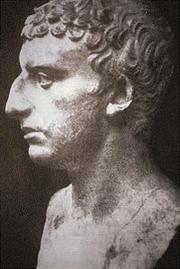
Flavius Josephus
A first-century Romano-Jewish historian and hagiographer of priestly and royal ancestry who recorded first century Jewish history, such as the First Jewish–Roman War which resulted in the Destruction of Jerusalem in 70 AD.
4 books
Flavius Vegetius Renatus
Publius Flavius Vegetius Renatus, commonly referred to simply as Vegetius, was a writer of the Later Roman Empire. Nothing is known of his life or station beyond what he tells us in his two surviving works: Epitoma rei militaris (also referred to as De Re Militari), and the lesser-known Digesta Artis Mulomedicinae, a guide to veterinary medicine. See http://en.wikipedia.org/wiki/Publius_Flavius_Vegetius_Renatus
1 book
Flea
1 book
Fleet Cooper
1 book
Fletcher, Banister Sir
1 book
Fletcher Dunn
1 book
Fletcher G. Driscoll
1 book
Fletcher Heisler
1 book
Fletcher Knebel
1 book
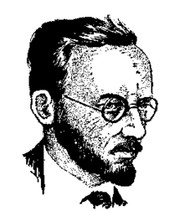
Fletcher Pratt
Murray Fletcher Pratt (1897–1956) was an American writer of science fiction, fantasy and history. He is best known for his works on naval history and on the American Civil War and for fiction written with L. Sprague de Camp.
3 books
Fleur Beale
1 book
Fleur Jaeggy
3 books
F. L. Gillette
1 book
Flint Dille
1 book
Floating Gallery
1 book
Flo Braker
1 book
Floella Benjamin
1 book
Flo Hoppe
1 book
Flo Perry
1 book
Flora Casas
1 book