Authors
Page 529
George R. R. Martin
George R. Terry
1 book
George Runger
1 book
George Russell
1 book
George Saintsbury
1 book
George Samuel Schuyler
(1895–1977), satirist, critic, and journalist. George Samuel Schuyler was born in Providence, Rhode Island, to Eliza Jane Fischer and George S. Schuyler. He grew up in a middle-class, racially mixed neighborhood in Syracuse, New York, where he attended public schools until he enlisted in the army at the age of seventeen. He spent seven years (1912–1919) with the black 25th U.S. Infantry and was discharged as a first lieutenant. From early on, Schuyler possessed a high level of confidence and boasted of his family having been free as far back as the Revolutionary War. In 1921, Schuyler joined the Socialist Party of America, through which he connected with A. Philip Randolph, who hired him in 1923 as assistant editor for the Messenger; in that position, from 1923 to 1928, Schuyler also wrote a column entitled “Shafts and Darts: A Page of Calumny and Satire.” In 1924, Schuyler became the New York correspondent for the Pittsburgh Courier, contributing a weekly commentary, “Views and Reviews.” Schuyler led several investigative series while with the Courier, including one entitled “Aframerican Today,” reporting on race relations in Mississippi in 1925–1926. In 1926, his article “The Negro-Art Hokum,” published in the Nation, propelled him into the middle of the literary debate of the Harlem Renaissance. While Schuyler was concerned with race difference always being interpreted as inferiority and was trying to refute negative stereotypes, his statement in that essay, “the Aframerican is merely a lampblacked Anglo-Saxon,” caused him to be labeled as an assimilationist throughout his career. In 1927, “Our White Folks” was published in H. L. Mencken's American Mercury; from this, Schuyler's reputation grew and Mencken published nine more of Schuyler's articles between 1927 and 1933. By the end of the 1920s, Schuyler began to acquire a national reputation as an iconoclast; despite his constant attacks on white racism, his commitment to exposing fraud, regardless of race, caused some African Americans to doubt his racial loyalty. In 1928, Schuyler married Josephine Cogdell, a white Texan ex-model. In 1931, Schuyler published his first satirical novel, Black No More, Being an Account of the Strange and Wonderful Workings of Science in the Land of the Free. The bulk of Schuyler's reputation rests on the success of this novel, which attacks myths of racial purity and white supremacy and the ways in which the perpetuation of racism serves economic purposes. Also in 1931, Schuyler became the first African American writer to serve as a foreign correspondent for a metropolitan newspaper, when the New York Evening Post sent him to assess the controversy of Liberia's slave labor. The articles were condemned by Marcus Garvey supporters, but based on the experience he published Slaves Today: A Story of Liberia (1931). Schuyler also had several literary alter egos. Between 1933 and 1939, he produced fifty-four short stories and twenty novels/novellas in serialized form under such pen names as Samuel I. Brooks and Rachel Call. Until recently, scholars paid no attention to this body of work and Schuyler's own attitude toward his serialized fiction ranged from amusement to disdain. The freedom of a pen name allowed him to explore melodrama, and in contrast to the audience for his satirical essays and his novel, Black No More, Schuyler wrote his serialized fiction for an exclusively African American audience. To date, four of his serialized novels have been reprinted into two volumes: Black Empire (1991) and Ethiopian Stories (1995). Black Empire explores the success of the retaking of Africa from European colonial powers; Ethiopian Stories explores Ethiopia's wars against Italian occupation. Schuyler continued his career as a journalist until 1966, when he published his autobiography, Black and Conservative, which gives an inside track to the feuds among the leaders of the Harlem Renaissance, as well as a lo
1 book
George Sand
2 books
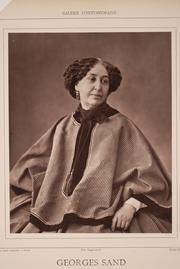
George Sand
Amantine Aurore Lucile Dupin, later Baroness Dudevant, best known by her pseudonym George Sand was a French novelist. She is considered by some a feminist although she refused to join this movement. She is regarded as the first French female novelist to gain a major reputation. - Wikipedia
4 books
George Sanders (Actor
1 book
George Sandison
1 book
George Sandys
1 book
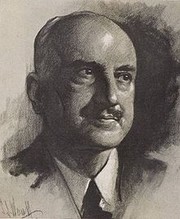
George Santayana
George Santayana (born Jorge Agustín Nicolás Ruiz de Santayana y Borrás, December 16, 1863 – September 26, 1952) was a Spanish philosopher, essayist, poet, and novelist.[2] Born in Spain, he moved to the United States at the age of eight.
3 books
George Sarton
1 book
George Sassoon
1 book
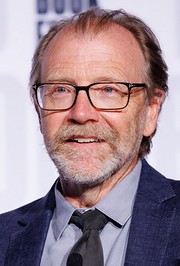
George Saunders
George Saunders (born December 2, 1958) is an American writer. He is best known for his short stories and his novel Lincoln in the Bardo (2017), which won the Booker Prize. Saunders' short stories have been published as several collections, including CivilWarLand in Bad Decline (1996) and Tenth of December: Stories (2013).
11 books
George Saunders

Georges Bataille
10 books

Georges Bernanos
3 books
Georges Bess
1 book

Georges Bizet
1 book
George Schell
1 book
George S. Clason
2 books
George S. Day
1 book

Georges Duby
5 books
George Seddon
1 book

George Selden
George Selden was an American children's writer and author.
3 books
George S. Everly
1 book
George Sewell
1 book
George Sewell
1 book
Georges-G Toudouze
1 book
George Shaw
1 book
George Shea
1 book
George Shea
1 book
George Shoobridge Carr
1 book
George Simpson
1 book

Georges Ivanovitch Gurdjieff
George Ivanovich Gurdjieff was a mystic, philosopher, spiritual teacher, and composer of Armenian and Greek descent, born in Alexandrapol (now Gyumri), Armenia. Gurdjieff taught that most humans do not possess a unified consciousness and thus live their lives in a state of hypnotic "waking sleep", but that it is possible to awaken to a higher state of consciousness and achieve full human potential. Gurdjieff described a method attempting to do so, calling the discipline "The Work"(connoting "work on oneself") or "the Method". According to his principles and instructions, Gurdjieff's method for awakening one's consciousness unites the methods of the fakir, monk and yogi, and thus he referred to it as the "Fourth Way". ---Wikipedia
1 book
Georges Jeanty
1 book

George S. Kaufman
1 book
George S. Kobayashi
1 book
George S. Kriz
1 book
Georges Lafaye
1 book
Georges Lafaye
1 book
Georges Lefebvre
2 books
Georges Lemoine
Some disambiguation is needed here. Who was this guy born 1859? One Georges Lemoine was a French professor of chemistry, fl. 1881. Georges Lemoine (1860-1912) wrote a French-Montagnais dictionary. Georges Lemoine (born 1935) is a French illustrator.
1 book
Georges-Louis Leclerc, comte de Buffon
1 book
Georges Louis Leclerc De Buffon
1 book
George S. McGovern
1 book
Georges Minois
1 book
George Smith
1 book
George S. Morrison
1 book