Authors
Page 530
Georges Muchery
1 book

Georges Nzongola-Ntalaja
1 book
George Soros
1 book

George Soros
Hungarian-American business magnate, investor and philanthropist
6 books
George S. Overton
1 book
George Spafford
1 book

George S. Patton
George Smith Patton, Jr., (November 11, 1885 – December 21, 1945) was a General of the United States Army who commanded the U.S. Seventh Army in the Mediterranean theater of World War II, and the U.S. Third Army in France and Germany following D-Day, the Allied invasion of Normandy in June 1944. Source: George S. Patton on Wikipedia.
1 book
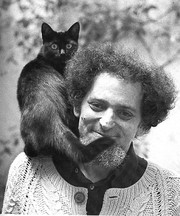
Georges Perec
10 books
George S., Ph.D. Kobayashi
1 book
George S. Pransky
1 book
Georges Rouault
1 book

Georges Sadoul
Georges Sadoul (4 February 1904 – 13 October 1967) was a French journalist and cinema writer. Source: Georges Sadoul on Wikipedia.
2 books
George S. Salvan
1 book
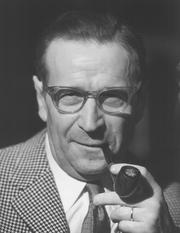
Georges Simenon
Georges Joseph Christian Simenon était un écrivain belge. Auteur prolifique, il a publié près de 200 romans et de nombreuses nouvelles. Il est surtout connu pour avoir créé le roman policier Maigret. Georges Joseph Christian Simenon was a Belgian writer. A prolific author who published nearly 200 novels and numerous short works, Simenon is best known for the creation of the fictional detective Maigret.<sup>1</sup>
87 books
Georgess McHargue
1 book
Georges Sorel
1 book
Georges St-Pierre
1 book
George Staab
3 books
George Stalk
1 book
George Stallion
1 book
George Stanley
3 books

George Steiner
American writer
3 books
George Stephanopoulos
1 book
George Stouffer
1 book
George Stuart
1 book
George Sudarshan
1 book
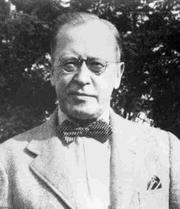
George Sylvester Viereck
George Sylvester Viereck was born in Munich, the son of an unrecognized son of Kaiser Wilhelm I. In 1897 his parents brought him to the United States. In 1904 he published his first collection of poems, Gedichte. In 1906 he graduated from the College of the City of New York. In 1907 he published Nineveh and Other Poems, which won him national fame. He also published one of the first known homosexual vampire novels, The House of the Vampire, in 1907. He became a Germanophile between 1907 and 1912, and in 1908 he published the best-selling Confessions of a Barbarian. He founded two publications, The International and The Fatherland, which argued the German cause during World War I, and he went on to become a Nazi apologist. In 1941 he was indicted for failing to disclose all his activities when he was required to register as a Foreign Agent in 1939. His guilty verdict may have been influenced by the nature of the undisclosed activities: he had set up a publishing house, Flanders Hall, to publish anti-British, anti-American, pro-German books. He was imprisoned from 1942 to 1947. During his imprisonment, his wife changed her opinion of the Nazis and divorced him, liquidating the assets he had left in her care and donating the proceeds to Catholic and Jewish charities. He wrote a memoir of life in prison, called Men into Beasts (1952), which contained brief descriptions of situational homosexuality and male rape (witnessed, not experienced, by Viereck), and became the first original title of 1950s gay pulp fiction. Although he wanted to resume his writing career, his other post-prison works were not successful. In 1955 he suffered a string of mild strokes and ceased writing. He died of a massive cerebral hemorrhage in 1962.
3 books
George T. Ainsworth-Land
1 book
George T. Ainsworth-Land
1 book

George Takei
1 book

George Takei
1 book
George Tchobanoglous
3 books
George Tenet
1 book
George Thaddeus Jones
1 book
George T. Heineman
1 book
George T. Milkovich
1 book
George Trombley
4 books
Georgette Ballance
1 book
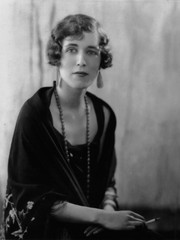
Georgette Heyer
Georgette Heyer was born on 16 August 1902 in Wimbledon, London, England, UK. She was the eldest child of Sylvia Watkins and George Heyer; her brother George Boris was born four years later, and her brother Frank nine years later. During her childhood, the family lived also in Paris, France, but they returned to England before World War I. During the war, her father served as a requisitions officer for the British Army in France. Her father encouraged her to read, he never forbade her any book. At 17, she began a serial story to amuse her brother Boris, who suffered from a form of haemophilia and was often weak. Her father enjoyed listening to her story and asked her to prepare it for publication. His agent found a publisher for her book, and "The Black Moth" was released in 1921. In December 1920, she met George Ronald Rougier, a young man two years older than she, who studied at the Royal School of Mines to become a mining engineer. They became engaged the spring of 1925. By then she had published five novels. Only one month later, her father died of a heart attack, and, as he left no pension for his family, she assumed financial responsibility for her brothers, aged 19 and 14. On 18 August 1925, Georgette married George Ronald, but two months later, he was sent to Caucasus Mountains, and she remained at home and continued to write. She released "These Old Shades", during the midst of the UK General Strike of 1926; as a result, the novel received no newspaper coverage, reviews, or advertising. The novel sold 190,000 copies, and she refused for the rest of her life to promote her novels. Her husband was sent to the East African territory of Tanganyika, and she joined him in 1927. They moved to Macedonia in 1928, where she almost died after a dentist improperly administered an anaesthetic. She insisted they return to England before starting a family, and the following year they returned to England. In England, her husband started different businesses, but she was always the primary breadwinner. They had a son, Richard, and she continued to care for her brothers and mother. During the World War II, her husband and brothers served in the army, and to earn more money, she reviewed books for Heinemann. To minimize her tax liability, she formed a limited liability company, that paid salaries for her and her family. The tax inspectors discovered financial problems with the company, which she finally sold. Heyer wrote principally historical romance novels and some detective novels. She essentially established the historical sub-genre of Regency romance, inspired by Jane Austen's work. Unlike Austen, who wrote about and for the times in which she lived, Heyer was forced to include copious information about the period so that her readers would understand the setting. To ensure accuracy, she collected reference works and kept detailed notes on all aspects of Regency life, becoming an expert. Her successful regency novels were imitated by many other authors, and in some cases were allegedly plagiarized, but she chose not to file lawsuits. She continued writing until her death by lung cancer on 4 July 1974; her novel My Lord John, the first and only book of the Lancaster Trilogy, was published posthumously.
61 books
Georgette Jones
1 book
George T. Tsoumis
1 book
George Vecsey
1 book
George V. Higgins
American author, lawyer, newspaper columnist, raconteur and college professor. He authored more than thirty books, including Bomber's Law, Trust, and Kennedy for the Defense, and is best known for his bestselling crime novels, including The Friends of Eddie Coyle, which established the Boston noir genre of gangster tales that spawned several popular films by followers in the late 20th and early 21st centuries.
2 books
George Vithoulkas
1 book
George V. Neville-Neil
1 book
George Washington
1 book
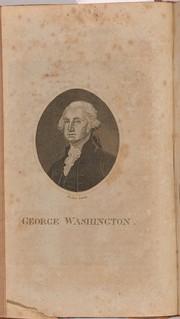
George Washington
4 books
George Washington Cable
1 book

George Washington Carver
1 book
George W. Beahm
4 books