Authors
Page 562
Gunesekera Romesh
1 book
Gunilla Bergström
Swedish journalist and writer of children's books.
1 book
Gunilla C. Bentel
1 book
Gunilla von Post
1 book
Gunjan Narang
1 book
Gunnar Andri Thorisson
1 book
Gunnar Hansen
1 book
Gunter Endres
1 book
Gunter Faure
2 books
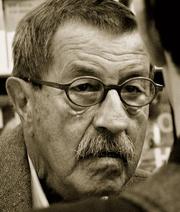
Günter Grass
German novelist, poet, playwright, illustrator, graphic artist, and sculptor
8 books
Günter Grau
1 book

Günter Grau
1 book
Günter K. Koschorrek
1 book
Günter Metken
1 book
Gunter Oertel
1 book
Günter Schmölders
1 book
Günter Wyszecki
1 book
Gunthard Weber
1 book
Gunther Bahnemann
1 book
Gunther Kress
1 book
Günther Zuntz
1 book
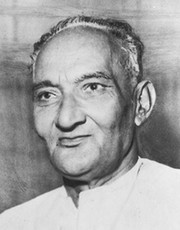
Gunvantrai Popatbhai Acharya
1 book
Guo Jian
1 book
Guojing
1 book
Gurcharan Das
3 books
Gurihiru
1 book
Guritno Mangkoesoebroto
1 book
Gurmukh Kaur Khalsa
1 book
Gurney
1 book
Gurney, John
1 book
Gürol Koca
1 book
Guro Verlag
1 book
Guruchander S. Khalsa
1 book
Guru Dharam Singh Khalsa
1 book
Gurukul
1 book
Gururaj Sanil
1 book
Gus Allen
3 books
Gus Giordano
1 book
Gus Hansen
1 book
Gus Lee
1 book
Gus Martin
1 book
Gus Moreno
1 book
Gus Russo
1 book
Gustaf Tenggren
1 book
Gustav Davidson
1 book
Gustav Ecke
1 book
Gustave de Beaumont
1 book

Gustave Flaubert
Gustave Flaubert was a French writer who is counted among the greatest Western novelists. He is known especially for his first published novel, Madame Bovary (1857), and for his scrupulous devotion to his art and style. (Source.)
10 books

Gustave Le Bon
Charles-Marie Gustave Le Bon (French: [ɡystav lə bɔ̃]; 7 May 1841 – 13 December 1931) was a leading French polymath whose areas of interest included anthropology, psychology, sociology, medicine, invention, and physics. He is best known for his 1895 work The Crowd: A Study of the Popular Mind, which is considered one of the seminal works of crowd psychology. A native of Nogent-le-Rotrou, Le Bon qualified as a doctor of medicine at the University of Paris in 1866. He opted against the formal practice of medicine as a physician, instead beginning his writing career the same year of his graduation. He published a number of medical articles and books before joining the French Army after the outbreak of the Franco-Prussian War. Defeat in the war coupled with being a first-hand witness to the Paris Commune of 1871 strongly shaped Le Bon's worldview. He then travelled widely, touring Europe, Asia and North Africa. He analysed the peoples and the civilisations he encountered under the umbrella of the nascent field of anthropology, developing an essentialist view of humanity, and invented a portable cephalometer during his travels. In the 1890s, he turned to psychology and sociology, in which fields he released his most successful works. Le Bon developed the view that crowds are not the sum of their individual parts, proposing that within crowds there forms a new psychological entity, the characteristics of which are determined by the "racial unconscious" of the crowd. At the same time he created his psychological and sociological theories, he performed experiments in physics and published popular books on the subject, anticipating the mass–energy equivalence and prophesising the Atomic Age.[citation needed] Le Bon maintained his eclectic interests up until his death in 1931. Ignored or maligned by sections of the French academic and scientific establishment during his life due to his politically conservative and reactionary views, Le Bon was critical of majoritarianism and socialism.
1 book
Gustav Espig
1 book