Authors
Page 563
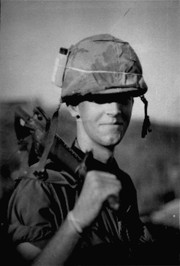
Gustav Hasford
1 book
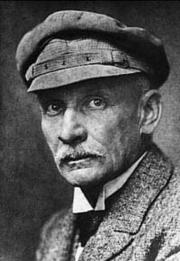
Gustav Meyrink
2 books
Gustav Niemann
1 book
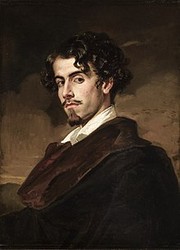
Gustavo Adolfo Bécquer
Gustavo Adolfo Bécquer (February 17, 1836 – December 22, 1870) was a Spanish Romanticist poet and writer (mostly short stories), also a playwright, literary columnist, and talented in drawing. Today he is considered one of the most important figures in Spanish literature, and is considered by some as the most read writer after Cervantes. He adopted the alias of Bécquer as his brother Valeriano Bécquer, a painter, had done earlier. He was associated with the romanticism and post-romanticism movements and wrote while realism was enjoying success in Spain. He was moderately well known during his life, but it was after his death that most of his works were published. His best known works are the Rhymes and the Legends, usually published together as Rimas y leyendas. These poems and tales are essential to the study of Spanish literature and common reading for high-school students in Spanish-speaking countries. Source: Gustavo Adolfo Bécquer on Wikipedia.
1 book
Gustavo Aguilera
1 book
Gustavo Augusto Schmidt de Melo
1 book
Gustavo Bolivar Moreno
1 book
Gustavo Bolívar Moreno
1 book
Gustavo Cerbasi
1 book
Gustavo Gutiérrez
1 book
Gustavo Mercado
1 book

Gustav Schwab
1 book
Gustavus Hindman Miller
1 book
Gustaw Herling-Grudziński
1 book
Gust Skordas
1 book
Gus Van Sant
1 book
Gus Wright
1 book
Güven Güzeldere
1 book
Guy A. Sims
1 book

Guy Baldwin
2 books
Guy Bass
1 book
Guy Boothby
Australian writer
4 books
Guy Claxton
1 book
Guy Clifford
1 book
Guy Cohen
2 books
Guy Consolmagno
1 book
Guy Corneau
1 book
Guy Crosby
1 book
Guy Davenport
1 book
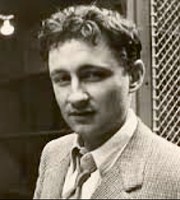
Guy Debord
3 books
Guy Debord
2 books

Guy Delisle
Canadian graphic novelist
9 books
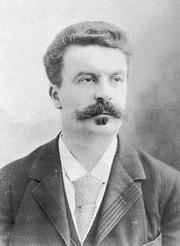
Guy de Maupassant
Guy de Maupassant, né le 5 août 1850 au château de Miromesnil près de Tourville-sur-Arques (France) et mort le 6 juillet 1893 dans le 16e arrondissement de Paris, est un écrivain et journaliste littéraire français. Lié à Gustave Flaubert et à Émile Zola, Maupassant a marqué la littérature française par ses six romans, dont Une vie en 1883, Bel-Ami en 1885, Pierre et Jean en 1887-1888, et surtout par ses nouvelles (parfois intitulées contes) comme Boule de Suif en 1880, les Contes de la bécasse (1883) ou Le Horla (1887). Ces œuvres retiennent l’attention par leur force réaliste, la présence importante du fantastique et par le pessimisme qui s’en dégage le plus souvent, mais aussi par la maîtrise stylistique. La carrière littéraire de Maupassant se limite à une décennie — de 1880 à 1890 — avant qu’il ne sombre peu à peu dans la folie et ne meure peu avant l'âge de 43 ans. Reconnu de son vivant, il conserve un renom de premier plan, renouvelé encore par les nombreuses adaptations cinématographiques de ses œuvres. (Henry René Albert) Guy De Maupassant is generally considered to be the greatest French writer of short stories. One account says the location of his birth was the Château de Miromesnil, in Dieppe, though this is not certain. His paternal ancestors were of the minor aristocracy, and his maternal grandfather, Paul Le Poittevin, was Gustave Flaubert's godfather. His parents separated when he was 11 years old. Maupassant was gifted with a photographic memory, which aided him in recollecting events and characters for his stories. As a teenager, Maupassant was shown, by the poet Algernon Swinburne (1837-1909), a mummified hand. He used this haunting image in his early short story La Main Ecorchée (1875). In 1869 Maupassant started to study law in Paris, but soon, at age 20, he volunteered to serve in the army during Franco-Prussian War. After his return to Paris, Maupassant joined the literary circle of Gustave Flaubert, who introduced him to some of the leading writers of his day, including Emile Zola, Ivan Turgenev, and Henry James. Flaubert saw Maupassant regularly and schooled him in the craft of being a writer. From 1872 to 1880, Maupassant worked as a civil servant, first at the ministry of maritime affairs, then at the ministry of education. Toward the end of this time, Maupassant published his first poetry, Des Vers (1880). Later the same year he published his short story masterpiece, "Boule de Suif" (Ball of Fat) in the anthology Soirées de Medan (1880), edited by Emile Zola. The story, set during the Franco-Prussian War, is about passengers on a coach, one of whom is a well-known prostitute, nicknamed 'Boule de Suif.' The story later inspired director John Ford's Western film Stagecoach (1945). During the 1880s Maupassant created some 300 short stories, six novels, three travel books, and one volume of verse. In tone, his tales were marked by precision of style and a range of expression. Although his stories range from moving drama to sometimes bizarre comedy, it is his macabre horror stories that have received much attention. Among Maupassant's best known books is Une Vie (A Woman's Life, 1883), about the frustrating existence of a Norman wife, Bel-Ami (1885), which depicts an unscrupulous journalist. Pierre et Jean (1888) was a psychological study of two brothers. The novel was thought to be immoral, according to the classic definition, because the hero succeeds by doing wrong. Maupassant's most upsetting horror story, "Le Horla" (1887) (not to be confused with another of Maupassant's stories called "The Trip of Le Horla", which is about a hot air balloon), was about vampire-like ghouls, madness and suicide. Maupassant had suffered from syphilis since his 20's, which caused him neurological and mental problem in his later years, and which undoubtedly accounts for his shortened lifespan. Some critics have alleged that Maupassant's developing illness can be seen through a growing preocuppation with mental illness in his stories. However, the theme of mental illness is present even in his first collection, La Maison Tellier (1881), published at the height of his health. Maupassant's horror fiction consists of some 39 stories, only a tenth of his total work. A recurring theme in these is madness: "A Queer Night in Paris" is a paranoid nightmare: its narrator feels compelled to walk the streets. In "Who Knows?" the subject suffers from delusions about the furniture in his house. "Diary of a Madman" is a story about a judge, who commits murder, just for the experience, and condemns an innocent man to death for the crime. "The Inn" has many similarities with Stephen King's novel The Shining. His story, "The Hand," based on his teenage recollection, has inspired later authors and movie directors. Maupassant's writing is sometimes compared with that of Edgar Allen Poe. On January 2, 1892, Maupassant tried to commit suicide by cutting his throat and
42 books
Guy de Maupassat
1 book
Guy Deutscher
Israeli linguist
2 books
Guy Endore
1 book

Guy Fieri
1 book
Guy Finley
1 book

Guy Gavriel Kay
Guy Gavriel Kay (born November 7, 1954) is a Canadian author of fantasy fiction. Many of his novels are set in fictional realms that resemble real places during real historical periods, such as Constantinople during the reign of Justinian I or Spain during the time of El Cid. Those works are published and marketed as historical fantasy, though the author himself has expressed a preference to shy away from genre categorization when possible. (Wikipedia)
15 books
Guy Gibson
1 book
Guy Goodwin-Gill
1 book
Guy Gugliotta
1 book
Guy Haley
1 book
Guy Hart-Davis
1 book
Guy Johnson
1 book
Guy Kawasaki
4 books
Guy Kettelhack
1 book
Guy Kirby Letts
1 book
Guyla Nelson
1 book
Guy Lautard
1 book