Authors
Page 786
Jordan Pelovitz
1 book
Jordan Quinn
2 books
Jordan Romero
1 book
Jordan Rubin
1 book
Jordan Scott
1 book
Jordan Sonnenblick
7 books
Jordan S. Pober
1 book
Jordan Summers
1 book
Jordan Weisman
1 book
Jordi Ainaud i Escudero
1 book
Jordi Bayod Brau
1 book
Jordi Boixadós Bisbal
2 books
Jordi Costa Vila
1 book
Jordi Cussà Balaguer
1 book
Jordi Fernando
1 book
Jordi Fibla
1 book
Jordi Fibla Feito
1 book
Jordi Martín Lloret
2 books
Jordi Monés
1 book
Jordi Parramon Blasco
1 book
Jordi Sierra i Fabra
2 books
Jordi Suris
1 book

Jordyn Frederick
1 book
Jordyn Taylor
1 book

Jordy Rosenberg
Jordy Rosenberg is the author of Confessions of the Fox, and The Day Unravels What the Night Has Woven. Jordy is a Professor at the University of Massachusetts Amherst, where he teaches 18th-century Literature, Gender and Sexuality studies, and Critical Theory. He has received fellowships and awards from the Lannan Foundation, the Marion and Jasper Whiting Foundation, The Ahmanson Foundation/J. Paul Getty Trust, the UCLA Center for 17th- and 18th-Century Studies, the Society for the Humanities at Cornell University, and the Clarion Foundation/Clarion Science Fiction and Fantasy Writers Workshop. He is also the author of a scholarly monograph, Critical Enthusiasm: Capital Accumulation and the Transformation of Religious Passion (Oxford University Press). Photo: Beowulf Sheehan
1 book
Jörg Blech
1 book
Jörg Braun
1 book
Jorge Aguirre
1 book
Jorge A Villalobos S
1 book
Jorge Bucay
1 book
Jorge Bucay
1 book
Jorge Cervantes
2 books
Jorge Cham
1 book
Jorge de Bustamante
1 book
Jorge de Cascante
1 book
Jorge D. Pamplona Roger
1 book
Jorge Enciso
3 books
Jorge Enciso
1 book
Jorge E. Quiroga Ch.
1 book
Jorge Franco
1 book
Jorge Franco Ramos
1 book
Jorge G. Castañeda
1 book
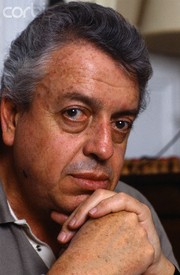
Jorge Ibargüengoitia
From Wikipedia: "Jorge Ibargüengoitia Antillón (22 January 1928 - 27 November 1983) was a Mexican novelist and playwright who achieved great popular (though not always critical) success with his satires, three of which have appeared in English: Las muertas (The Dead Girls), Dos crímenes (Two Crimes), and Los relámpagos de agosto (The Lightning of August)".
1 book

Jorge Icaza
Jorge Icaza Coronel (June 10, 1906 – May 26, 1978), commonly referred to as Jorge Icaza, was a writer from Ecuador, best known for his novel Huasipungo, which brought attention to the exploitation of Ecuador's indigenous people by Ecuadorian whites. He was born in Quito in 1906 and died of cancer in the same city in 1978
1 book
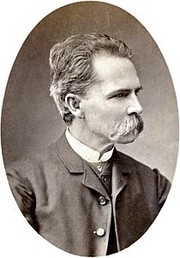
Jorge Isaacs
"Jorge Isaacs Ferrer was a Colombian writer, politician and soldier. His only novel, María, became one of the most notable works of the Romantic movement in Spanish-language literature." - Wikipedia
1 book
Jorge L. Chaar Cacho
1 book
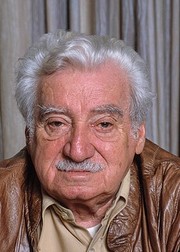
Jorge Leal Amado de Faria
Jorge Leal Amado de Faria (10 August 1912 – 6 August 2001) was a Brazilian writer of the modernist school. He remains the best known of modern Brazilian writers, with his work having been translated into some 49 languages and popularized in film, notably Dona Flor and Her Two Husbands in 1976. His work reflects the image of a Mestiço Brazil and is marked by religious syncretism. He depicted a cheerful and optimistic country that was beset, at the same time, with deep social and economic differences. He occupied the 23rd chair of the Brazilian Academy of Letters from 1961 until his death in 2001. He won the 1984 International Nonino Prize in Italy. Jorge Amado also was Federal Deputy for São Paulo by Brazilian Communist Party (PCB) between 1947 and 1951. Source: Jorge Amado on Wikipedia
7 books
Jorge Luis Borges
1 book
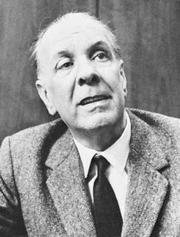
Jorge Luis Borges
Jorge Francisco Isidoro Luis Borges (Buenos Aires, 24 de agosto de 1899 - Ginebra, 14 de junio de 1986), más conocido como Jorge Luis Borges, fue un destacado escritor de cuentos, poemas y ensayos argentino, extensamente considerado una figura clave tanto para la literatura en habla hispana como para la literatura universal. También fue bibliotecario, profesor, conferencista y traductor. Sus dos libros más conocidos, Ficciones y El Aleph, publicados en los años cuarenta, son recopilaciones de cuentos conectados por temas comunes de forma fantástica, como los sueños, los laberintos, las bibliotecas, los espejos, los autores ficticios y las mitologías europeas (como la griega y la nórdica), con argumentos que exploran ideas filosóficas relacionadas, por ejemplo, con la memoria, la eternidad, la posmodernidad y la metaficción. Las obras de Borges han contribuido ampliamente a la literatura filosófica, al género fantástico y al posestructuralismo. Según marcan numerosos críticos, el comienzo del realismo mágico en la literatura hispanoamericana del siglo XX se debe en gran parte a su obra.
64 books
Jorge Luján
1 book