Authors
Page 787
Jorge Monlongo
1 book
Jorge Muriel
1 book
Jorgen Randers
2 books
Jørgen Randers
1 book
Jorge Olmos Arrayales
1 book
Jorge Otis
1 book
Jorge Paredes
1 book
Jorge Pérez
1 book
Jorge Ramos
2 books
Jorge Rizo
1 book
Jorge Segers
1 book
Jorge Viñes Roig
1 book
Jorge Volpi Escalante
1 book

Jorge V. Sibal
1 book
Jörg Mailliet
1 book
Jorie Graham
2 books
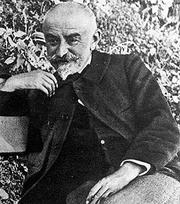
Joris-Karl Huysmans
Joris-Karl Huysmans is the pen name of 19th century French novelist and art critic Charles-Marie-Georges Huysmans. His early works were in the Naturalist school, and he later wrote Symbolist and Catholic literature, paralleling his own conversion to Roman Catholicism. Huysmans is best remembered for his 1884 Décadent novel À rebours. Joris-Karl Huysmans was born on 5 February 1848 in Paris, the son of a Dutch lithographer and a former school teacher. When Joris-Karl was eight, his father died, and his mother soon after remarried. After earning the baccalauréat, Huysmans held a clerical position in the French Ministry of the Interior for 32 years. He was drafted for the Franco-Prussian War of 1870, but discharged due to dysentery. Huysmans' first published book was a Décadent prose poem collection entitled Le drageoir à épices (1874). It was followed two years later by his first novel, Marthe, histoire d'un fille (Marthe, the Story of a Girl). This novel and those that would follow over the next decade were written in the Naturalist school and praised by Emile Zola. Marthe was about a prostitute, and other themes Huysmans explored in his early works included failed marriage, dead-end jobs, and everyday life in Paris. À rebours, which details the increasingly bizarre entertainments of an effete, reclusive antihero, marked a turning point in Huysmans' career. Zola, among others, condemned the work, which represented a major departure in style for Huysmans. Critics were scandalized at the book's content. However, though the work lost its author some supporters, it gained him a new following among Symbolist and Décadent writers, including Oscar Wilde, Paul Valéry, and Stéphane Mallarmé. Wilde incorporated À rebours into his novel The Picture of Dorian Gray, though he did not mention it by name. A few more Décadent works were to follow À rebours, including En rade in 1887 and Là-Bas in 1891. The latter became notorious for its portrayal of Parisian Satanism and featured the debut of a recurring semi-autobiographical character in Huysmans' works, the writer Durtal. In Là-Bas, Durtal is working on a book about the medieval serial killer Giles de Rais when he finds himself torn between the influences of a pious cathedral bell-ringer and a woman involved in a Satanic cult who becomes his mistress. Durtal would reappear in Huysmans' next two books, En route (1895) and La cathédrale (1898), which deal with the protagonist's conversion to Catholicism. La cathédrale became his best-selling work in his lifetime and allowed him to retire from his work as a civil servant. Durtal appeared in one more of Huysmans' novels, L'Oblat, in which he becomes an oblate, or a layperson dedicated to prayer. Durtal's experiences throughout Huysmans' work reflect the author's real life. Huysmans became a Chevalier of the Légion d'honneur in 1892 for his work at the Ministry of the Interior, and was promoted to Officier in 1905 in honor of his contribution to French literature. Sadly, he was diagnosed with oral cancer the same year. Joris-Karl Huysmans passed away on 12 May 1907 and is buried in the Montparnasse cemetery in Paris. Source
2 books

Joris Luyendijk
2 books

Joris Moens
Is verwekt in de directeurswoning van de Wereldbibliotheek en daar ook ter wereld gekomen. Daarna duurde het nog dertig jaar voor hij aan zijn klaarblijkelijke voorbestemming van romanschrijver gehoor gaf. Was ondermeer mede-oprichter van literair tijdschrift Zoetermeer en werd opgenomen in het Letterkundig Museum, maar lijkt vandaag de dag niet meer bijzonder druk met het literaire discours.
1 book
Jorjeana Marie
1 book
Jorjet Harper
1 book
Jörn Griebel
1 book
Jörn-Steffen Pischke
1 book
Jory Strong
1 book
José Alfredo Andrade Bojorges
1 book
Jose Andres
1 book
José Antonio Álvaro Garrido
1 book
José Antonio Burciaga
1 book
Jose Antonio Rey
1 book
José Antonio Rey
1 book
Jose Antonio Vargas
Filipino journalist and immigration activist
1 book
José Antonio Villarreal
1 book
José Antonio Villarreal
1 book
José A. Ramalho
1 book
Jose Aruego
2 books
Jose Baez
1 book
José Bianco
1 book
Jose Canseco
1 book
José Carlos Baleeiro
1 book
Jose Carlos De Francisco
1 book
José Carlos Fernández Corte
1 book

José Carlos Somoza
José Carlos Somoza Ortega (born November 13, 1959) is a Spanish author. He was born in Havana, Cuba. In 1960 his family moved to Spain after being exiled for political reasons. His family proved to be in difficult financial situation after having moved to Spain because they had been forbidden to take anything along except their child. And there were a lot of friends who helped them a lot during their first years in Spain. He holds a Bachelor's Degree in psychiatry, but he gave up medicine in order to become a full-time writer in 1994. Since 1994 he made his first steps in writing and sent his works to the different literature competitions, to magazines and publishers all over Spain. And his first book was published the same year. When his fifth novel The Cave of Ideas obtained an international acknowledge, he realized that he had chosen the right route in his life. Source: José Carlos Somoza on Wikipedia.
1 book
José C. Vales
1 book

Jose Dalisay Jr.
Jose Y. Dalisay Jr. is a Filipino writer. He has won numerous awards and prizes for fiction, poetry, drama, non-fiction and screenwriting, including 16 Palanca Awards.
1 book

José de Alencar
José de Alencar was a Brazilian lawyer, politician, orator, novelist and dramatist. He is considered to be one of the most famous and influential Brazilian Romantic novelists of the 19th century, and a major exponent of the literary tradition known as "Indianism" (romantic tales of indigenous life incorporating vocabulary of Amerindian origin referring to flora, fauna, and tribal customs). José de Alencar foi um escritor e político brasileiro. É notável como escritor por ter sido o fundador do romance de temática nacional.
2 books
Jose De Diego
1 book
Jose Donoso
1 book
José Donoso
1 book
José Donoso
1 book
José Dordoigne
1 book